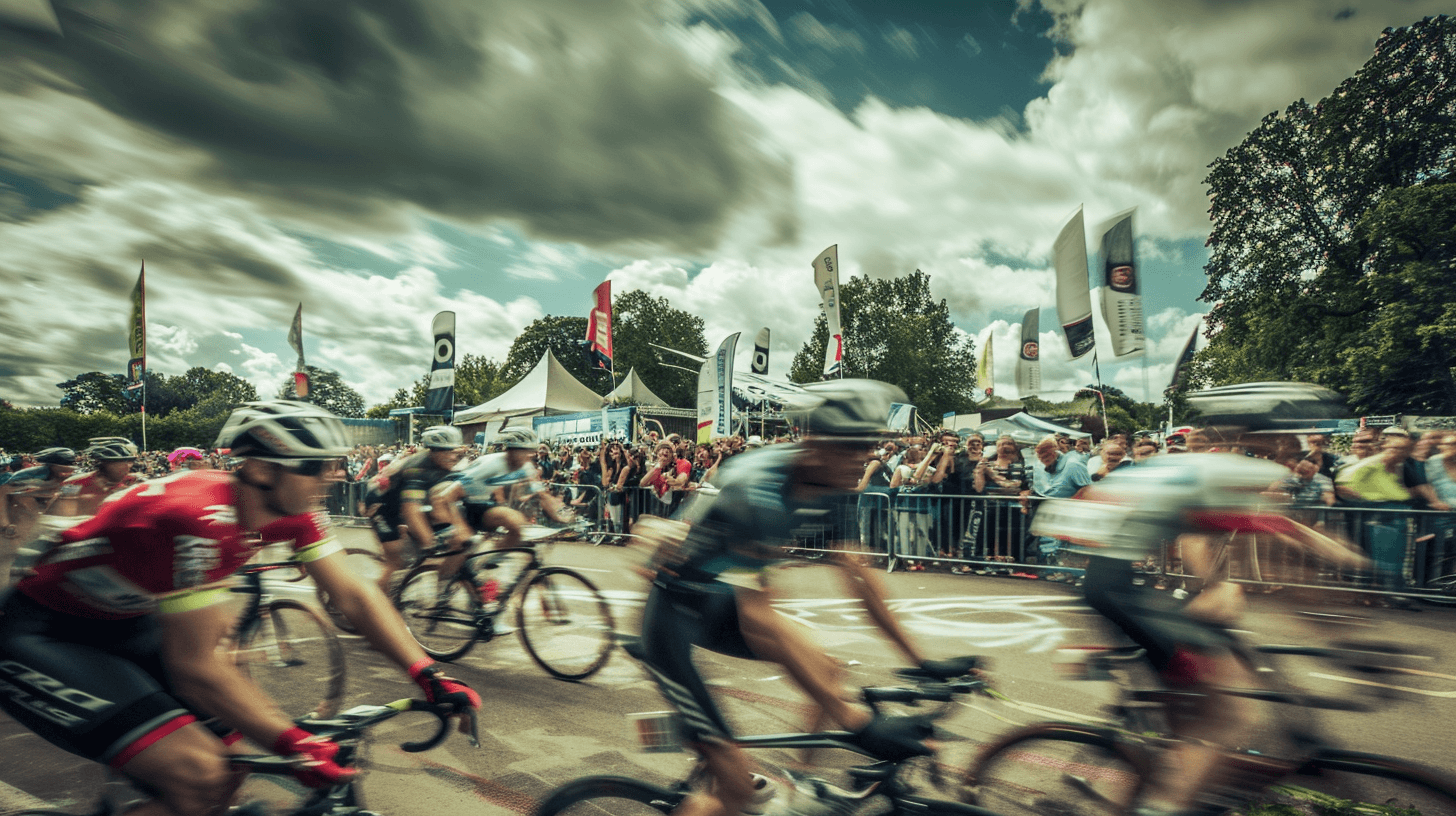
Cherry juice cycling gained brief visibility during the Tour de France, driven by repeated media exposure of top athletes and existing nutrition partners. Cherry juice became the talk of the Tour in 2025 — proof that even the smallest sponsorship-adjacent details can dominate the conversation. Search interest around cherry juice Tour de France increased noticeably, while brands such as AMACX cherry juice appeared frequently in broadcast and social coverage without forming a dedicated sponsorship category.
Cherry-juice-associated nutrition brands in the WorldTour peloton
Before looking at attention and timing, it is worth establishing the structural baseline. Which nutrition brands commonly associated with cherry-based recovery products are actually present as partners in the WorldTour and Women’s WorldTour?
Men’s WorldTour (WTT)
| Brand | Teams |
|---|---|
| 6d Sports Nutrition | Soudal–Quick-Step; Team Jayco AlUla |
| AMACX | EF Education–EasyPost; Team Visma–Lease a Bike; Bahrain Victorious |
| Enervit | UAE Team Emirates–XRG |
Women’s WorldTour (WTW)
| Brand | Teams |
|---|---|
| 6d Sports Nutrition | AG Insurance–Soudal; Liv AlUla Jayco |
| AMACX | Visma–Lease a Bike Women; UAE Team ADQ; EF Education–Oatly |
| Science in Sport | Human Powered Health |
Note: Each brand is listed once per category to reflect structural presence, not exposure frequency. All listed brands operate as full-range sports nutrition suppliers; cherry-based products represent only a small part of broader portfolios.
Working in cycling sponsorship, marketing or media?
Get the pro cycling commercial recap.
One edition per month. No noise.
How nutrition brands build visibility beyond teams
Nutrition brands active in professional cycling rarely rely on a single sponsorship layer. WorldTour and Women’s WorldTour team partnerships form an important anchor, but they are only one element within broader visibility strategies.
This becomes visible when looking at how individual brands frame their partnerships. AMACX, for example, does not limit its communication to a single team relationship. Alongside Team Visma–Lease a Bike, AMACX references its involvement with UAE Team ADQ and EF Education–EasyPost. The EF partnership is given particular prominence through a dedicated section on AMACX’s own website, underlining how team sponsorships are actively curated and presented. Beyond these team relationships, AMACX also associates its brand with Q36.5 Pro Cycling Team as well as events such as the Amstel Gold Race, extending visibility beyond a single competitive context.
A similar multi-layered approach can be observed at Enervit. In addition to its partnership with UAE Team Emirates–XRG, the brand regularly highlights Tadej Pogačar as an individually supported athlete and references its long-standing relationship with the Italian Cycling Federation.
It is also notable that both brands appear within the same organisational ecosystem: AMACX is active on the women’s side through UAE Team ADQ, while Enervit is present on the men’s side via UAE Team Emirates–XRG — illustrating how nutrition visibility can span parallel programmes without being anchored to a single team or sponsorship category.
Taken together, these layered references help explain how moments of heightened attention — such as during the Tour de France — often reflect the combined effect of multiple sponsorship touchpoints rather than the impact of a single team deal.
A brief moment of visibility in the peloton
In the weeks leading up to — and throughout — the Tour de France 2025, cherry juice became noticeably more visible in professional cycling coverage. It appeared repeatedly in race imagery, behind-the-scenes footage and recovery-related narratives.
Part of this visibility stemmed from frequent exposure of riders associated with AMACX, whose bottles and recovery products featured regularly in broadcast footage and social clips. At the same time, it was almost expected to see the sport’s dominant rider, Tadej Pogačar, associated with cherry-based recovery products through his partnership with Enervit — a detail that was readily picked up and amplified in media coverage.
This pattern reflects the Tour de France’s exceptional role in amplifying short-term attention, as seen across broader Tour de France media visibility.
What people searched for — and how interest peaked
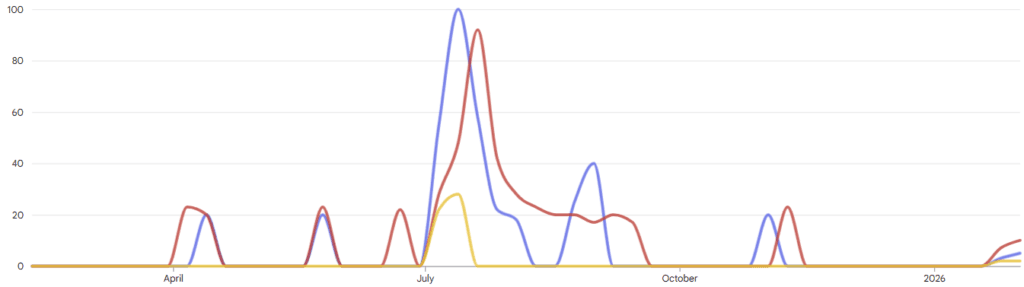
The Google Trends chart visualises the visibility moment clearly. Around the Tour de France period, search interest rose sharply across three related terms before dropping back to near-zero levels shortly afterwards.
The blue curve (AMACX cherry juice) peaks first and reaches the highest relative interest, closely followed by the red curve (Enervit Magic). In parallel, the more generic term cherry juice cycling (yellow) rises as well, albeit at a lower level and for a shorter duration.
All three curves peak within the same narrow time window in July, indicating a synchronised attention effect rather than independent product demand. Once media exposure faded, interest across all terms declined rapidly, leaving little residual baseline.
Source: Google Trends (2026). Google and the Google logo are registered trademarks of Google LLC, used with permission.
Rather than showing sustained demand, the chart captures a short, concentrated visibility phase — closely aligned with race coverage, athlete narratives and Tour de France amplification.
A Tour de France–driven peak
Google Trends data underlines the event-driven nature of this attention. Search interest spiked sharply during the Tour de France before dropping back to baseline levels shortly after the race concluded.
The Google Trends screenshot included with this article illustrates a classic Tour-linked pattern: a concentrated peak aligned with the race calendar, followed by rapid normalisation. Search interest followed media exposure, not seasonal nutrition behaviour or long-term consumer demand.
Visibility versus market reality
Placed against the structural baseline, the contrast becomes clear.
Despite the short-term surge in attention, cherry juice did not emerge as a sponsorship category. None of the listed partnerships are built around cherry-based products, and no team positions cherry juice as a defining element of its commercial narrative.
Cherry juice entered the peloton as a visible signal, not as a structural shift.
Structurally, these partnerships sit within established WorldTour sponsorship structures, rather than forming a distinct or emerging category.
What this moment tells us about nutrition visibility in cycling
This episode illustrates a recurring dynamic in professional cycling marketing. Visibility can emerge rapidly when athlete narratives, broadcast imagery and community conversations align — even without dedicated activations or category ownership.
For sponsorship and marketing analysis, such moments are valuable precisely because they sit between structure and perception. They show how attention forms, how it spreads across different layers of the sport, and how quickly it can fade again.
Cherry juice did not change the nutrition landscape in cycling. But it offers a clear case study in how visibility is created, amplified and dissolved within the professional cycling ecosystem.
Similar dynamics can be observed across cycling sponsorship dynamics more generally.
Methodology note
This analysis combines official WorldTour and Women’s WorldTour team partner listings (early 2026), search-volume data and Google Trends patterns. Only currently listed partnerships were considered. Historical associations and brand-only claims were excluded unless confirmed by team listings.
Sources:
https://www.enervit.com/en/enervit-sport
Get the Pro Cycling Commercial Recap. Monthly.
Curated insights on sponsorship, marketing and commercial developments in professional cycling.
No noise. One recap. Every month. Unsubscribe anytime.
Lates Instagram posts