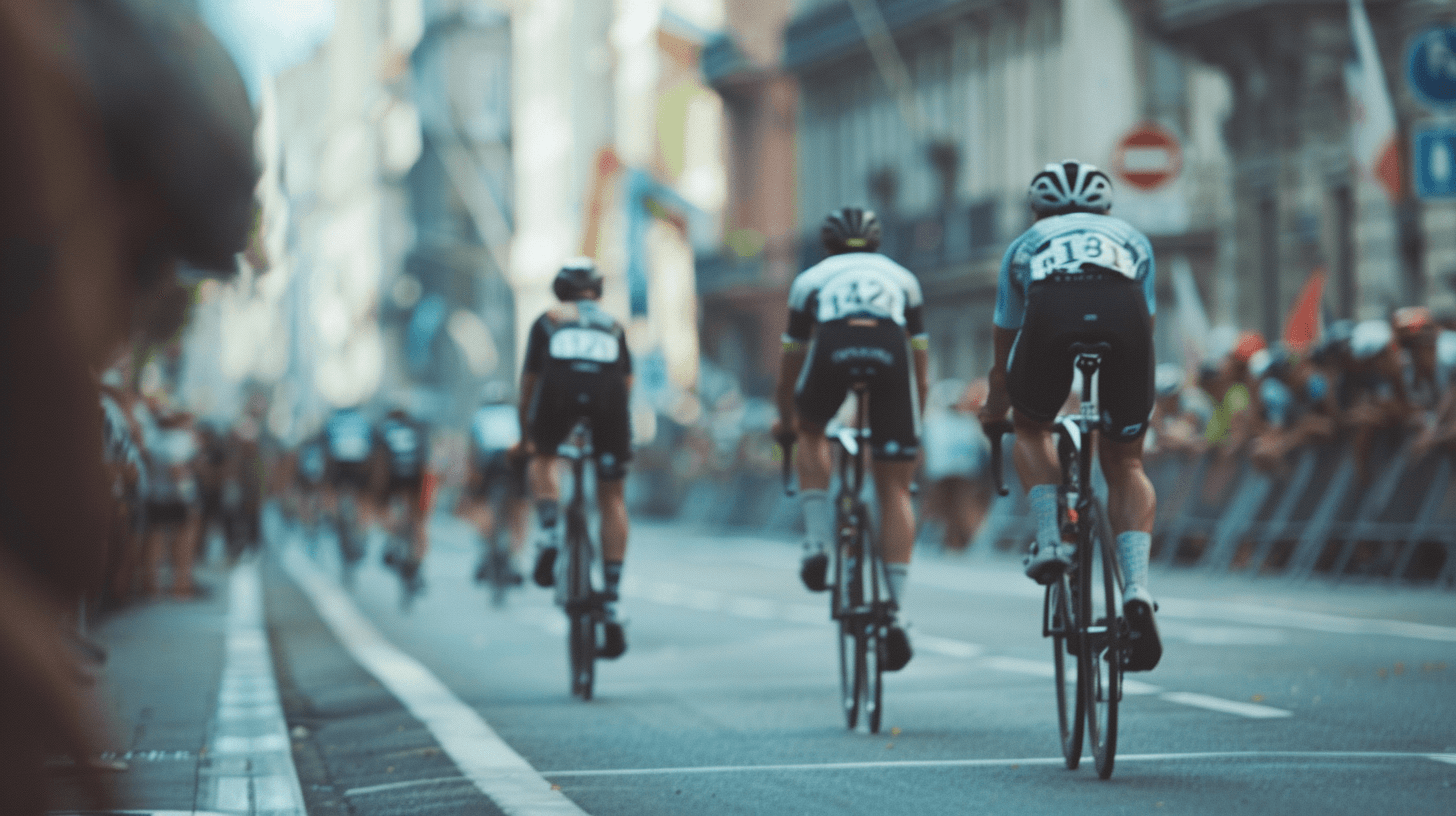
Professional cycling teams are named after their primary commercial backers. In 2026, 46 organizations hold title sponsorship positions across the Men’s and Women’s WorldTour, as defined by the official UCI WorldTour structure.
This overview documents all 46 WorldTour title sponsors, their industry classification and country of origin, and outlines structural patterns shaping capital concentration within elite cycling.
What Defines a Title Sponsor in Professional Cycling?
A title sponsor typically controls:
- Primary naming rights
- Front-of-jersey brand dominance
- Media reference priority
- A substantial share of annual team budget
- Category exclusivity within key commercial segments
Unlike secondary sponsors, title partners directly influence competitive ceilings. Budget scale affects rider recruitment, performance infrastructure, development programs and technical partnerships.
In dual-title models, naming hierarchy often reflects financial weight, though contractual specifics may vary.
For a broader sponsorship overview across professional cycling, see the Pro Cycling Sponsorship Overview 2026 (PDF).
Industry Structure of WorldTour Title Sponsors (2026)
| Title Sponsor | Industry | Country |
|---|---|---|
| ADQ | Finance & Investment | United Arab Emirates |
| AG Insurance | Insurance | Belgium |
| Alpecin | Healthcare | Germany |
| AlUla | Travel & Tourism | Saudi Arabia |
| Astana | Government & Institutions | Kazakhstan |
| Bahrain | Government & Institutions | Bahrain |
| BORA | Home & Building Products | Germany |
| Canyon | Bike & Equipment | Germany |
| CMA CGM | Logistics & Transport | France |
| Decathlon | Retail | France |
| EasyPost | Software & Logistics Tech | United States |
| EF Education First | Education | Switzerland |
| Emirates | Travel & Tourism | United Arab Emirates |
| FDJ United | Lottery | France |
| Fenix | Home & Building Products | Italy |
| Groupama | Insurance | France |
| Hansgrohe | Home & Building Products | Germany |
| Human Powered Health | Healthcare | United States |
| Ineos Grenadier | Mobility & Automotive | United Kingdom |
| INEOS | Industrial Materials & Chemicals | United Kingdom |
| Intermarché | Retail | France |
| Jayco | Mobility & Automotive | Australia |
| Lease a Bike | Mobility & Leasing | Germany |
| Lidl | Retail | Germany |
| Liv Cycling | Bike & Equipment | Taiwan |
| Lotto | Lottery | Belgium |
| Movistar | Telecom | Spain |
| NSN (Never Say Never) | Sports & Entertainment | Spain |
| Oatly | Food & Beverage | Sweden |
| Picnic | Retail | Netherlands |
| Premier Tech | Energy & Utilities | Canada |
| Protime | Software | Belgium |
| Quick-Step | Home & Building Products | Belgium |
| Red Bull | Food & Beverage | Austria |
| SD Worx | Software | Belgium |
| Soudal | Industrial Materials & Chemicals | Belgium |
| SRAM | Bike & Equipment | United States |
| Suez | Energy & Utilities | France |
| Trek | Bike & Equipment | United States |
| UAE | Government & Institutions | United Arab Emirates |
| Uno-X | Energy & Retail Fuel | Norway |
| Visma | Software | Norway |
| XDS | Bike & Equipment | China |
| XRG | Energy & Investment | United Arab Emirates |
| Zondacrypto | Finance & Crypto | Estonia |
The 46 title sponsors cluster into defined industry groups.
Working in cycling sponsorship, marketing or media?
Get the pro cycling commercial recap.
One edition per month. No noise.
Bike & Equipment (5)
Canyon (Germany)
Trek (United States)
Liv Cycling (Taiwan)
XDS (China)
SRAM (United States)
Cycling-native brands remain structurally embedded in the sport, though increasingly they share naming hierarchy with external capital partners.
Software, IT & Telecoms (5)
Visma (Norway)
SD Worx (Belgium)
Protime (Belgium)
EasyPost (United States)
Movistar (Spain)
Technology and telecom brands use title sponsorship for global B2B visibility and innovation signaling.
Energy & Utilities (4)
XRG (United Arab Emirates)
Uno-X (Norway)
Premier Tech (Canada)
Suez (France)
Energy-linked capital frequently signals higher financial ceilings and long-term structural investment.
Finance & Insurance (4)
AG Insurance (Belgium)
Groupama (France)
ADQ (United Arab Emirates)
Zondacrypto (Estonia)
Financial institutions remain historically embedded in professional cycling sponsorship.
Retail (4)
Lidl (Germany)
Intermarché (France)
Picnic (Netherlands)
Decathlon (France)
Retail groups represent one of the most rapidly expanding capital categories in WorldTour naming rights.
Home & Building Products (4)
BORA (Germany)
Hansgrohe (Germany)
Quick-Step (Belgium)
Fenix (Italy)
Industrial consumer brands continue to leverage cycling’s broadcast exposure for international positioning.
Mobility & Automotive (3)
Jayco (Australia)
Lease a Bike (Germany)
Ineos Grenadier (United Kingdom)
Mobility-linked sponsors align performance sport with engineering and product narratives.
Government & Institutions (3)
UAE (United Arab Emirates)
Bahrain (Bahrain)
Astana (Kazakhstan)
State-linked naming structures suggest coordinated national branding strategies rather than purely commercial sponsorship logic.
Healthcare (2)
Alpecin (Germany)
Human Powered Health (United States)
Healthcare remains comparatively underrepresented but performance-aligned.
Industrial Materials & Chemicals (2)
INEOS (United Kingdom)
Soudal (Belgium)
Heavy industry capital continues to anchor long-term team stability in selected structures.
Logistics & Transport (2)
CMA CGM (France)
PostNL (Netherlands)
Logistics groups leverage cycling’s international race calendar for cross-border exposure.
Travel & Tourism (2)
Emirates (United Arab Emirates)
AlUla (Saudi Arabia)
Tourism-linked sponsors frequently integrate national branding with global media reach.
Lottery (2)
FDJ United (France)
Lotto (Belgium)
Lottery sponsorship remains a legacy funding model within European cycling.
Food & Beverage (2)
Red Bull (Austria)
Oatly (Sweden)
Consumer beverage brands use naming rights to amplify lifestyle positioning and high-performance associations.
Education (1)
EF Education First (Switzerland)
A rare example of an education-focused global organization operating at title level.
Sports & Entertainment (1)
NSN (Never Say Never) (Spain)
Represents emerging crossover structures between sport, branding and entertainment positioning.
For a complete overview of team structures beyond title sponsorship, see our analysis of UCI WorldTour teams and their sponsor hierarchies.
Geographic Distribution of Title Sponsors (Unique Organizations)
When counting each organization once, title sponsors in 2026 are primarily concentrated in:
- France
- Germany
- Belgium
- United Arab Emirates
- United States
Western Europe remains the dominant capital base, while sovereign-backed entities from the Middle East represent a concentrated but financially significant cluster.
Emerging markets remain limited at title level, suggesting that naming rights continue to reflect established economic power centers.
Structural Patterns Across the 2026 WorldTour
| Structural Pattern | Representative Sponsors | What It Signals |
|---|---|---|
| Mirrored Men & Women Naming | Lidl · Trek · FDJ United · Visma · Lease a bike · Uno-X Mobility · EF · Movistar · Jayco | Integrated long-term brand alignment across both WTT and WTW structures |
| Sovereign / State-Linked Clusters | UAE · Bahrain · Astana | Coordinated national branding and capital concentration |
| Corporate Brand Layering | INEOS · Ineos Grenadier | Internal capital consolidation within a single corporate ecosystem |
| Retail Capital Expansion | Lidl · Decathlon · Intermarché · Picnic | Growing mass-market retail investment at title level |
| Technology & Infrastructure Positioning | Visma · Movistar · EasyPost · Protime · SD Worx | Digital infrastructure and B2B signaling through elite sport |
| Category Exclusivity Pressure | Red Bull · Oatly · Lidl · Decathlon | Stronger commercial control within adjacent product categories |
| Industrial Stability Anchors | Soudal · Hansgrohe · Quick-Step | Long-term industrial brand anchoring in traditional cycling markets |
Shared Naming Across Men’s and Women’s Teams
Several organizations maintain mirrored title sponsorship structures across both Men’s (WTT) and Women’s (WTW) teams. Examples include Lidl, Trek, FDJ United, Visma, Lease a bike, Uno-X Mobility, EF, Movistar or Jayco, where naming alignment signals integrated long-term brand strategy rather than isolated sponsorship agreements.
Identical naming across both categories typically indicates unified capital planning, shared activation strategies and structural commitment beyond short-term exposure cycles.
Sovereign Capital Concentration
State-linked sponsors remain concentrated within a limited number of teams, but their financial impact is disproportionate. UAE, Bahrain, Astana, ADQ, Emirates, AlUla and XRG illustrate how sovereign or state-affiliated entities cluster within broader team ecosystems.
In these cases, sponsorship often reflects coordinated national branding strategies rather than decentralized commercial marketing logic. The presence of multiple UAE-linked entities within the same competitive sphere is a clear example of capital consolidation through state-backed structures.
Capital Spillover Effects
Title-level investment can correlate with additional partners from the same geographic or industrial ecosystem. While not always directly causal, clustering patterns suggest influence over broader sponsor alignment.
Category Influence & Exclusivity
High-investment title sponsors frequently strengthen exclusivity pressure within adjacent commercial categories. For instance, consumer brands such as Red Bull, Oatly or retail groups like Lidl and Decathlon typically operate in commercially sensitive sectors where brand conflict management becomes strategically important.
Similarly, technology-driven title sponsors such as Visma, Movistar or EasyPost often shape the broader digital or logistics partner ecosystem surrounding a team. Title hierarchy therefore influences not only naming rights but also category access within the sponsorship structure.
A recent example of proactive capital expansion is the EF Pro Cycling title sponsor search, where the team publicly opened its naming rights to compete with the largest WorldTour budgets. The case illustrates how title sponsorship increasingly functions as competitive infrastructure rather than static branding.
Why Title Sponsors Define Competitive Ceilings
In professional cycling, title sponsors determine more than visual identity — they define financial scale.
Budget concentration influences:
- Rider acquisition
- Performance infrastructure
- Development pathways
- Technical partnerships
- Media reach
The 2026 distribution of title sponsors across industries and regions provides insight into the capital architecture shaping the modern WorldTour.
For a full quantitative breakdown including sponsor concentration analysis, see the WorldTour Sponsorship Overview 2026.
Source:
Publicly available team sponsor lists on official WorldTour team websites (Men’s and Women’s WorldTour), 2026 season.
Working in cycling sponsorship, marketing or media?
Get the pro cycling commercial recap.
Curated insights on sponsorship, marketing and commercial developments in professional cycling.
No noise. One recap. Every month. Unsubscribe anytime.
Lates Instagram posts