Sponsorship Growth, Brand Activations and Structural Questions Shape the Month
May 2026 brought another busy month for the business side of professional cycling. The Giro d’Italia remained a focal point for sponsorship activity, from new partnerships and activations to growing discussions around media value and audience reach. One of the clearest commercial trends was the continued arrival of AI-related sponsors and technology partners, highlighting how teams increasingly position themselves at the intersection of sport, data and innovation.
The merger of Zwift and ROUVY marked a significant moment in the evolution of cycling’s digital training platform market, while new Tour de France partnership announcements highlighted preparations for upcoming editions of the race. Alongside these commercial developments, debates around cycling’s economic structure, governance and sponsorship dependency continued to gain visibility, underlining the tension between commercial growth and the search for a more sustainable future for the sport.
Get the Monthly Recap
One recap. Every month. No noise. Unsubscribe anytime.
View all monthly pro cycling commercial recaps
Giro d’Italia 2026: New Sponsors, a WBD Rights Extension and the Bulgaria Start
The 109th Giro d’Italia has wrapped up, and the commercial picture surrounding the race was as busy as the racing itself. The full breakdown is in the Leadout analysis published ahead of the start. The Bulgarian Grande Partenza netted RCS Sport approximately €10 million — the first time the race has visited a Balkan country, extending its footprint into a market with limited prior cycling infrastructure and a new regional broadcast audience.
On the rights side, Warner Bros. Discovery extended its exclusive deal across 50 European markets until at least 2029, covering the Giro alongside Strade Bianche, Milan-San Remo, Il Lombardia and the UAE Tour.
On the sponsorship side, Fortnite joined as a new partner — the first time professional cycling has entered the gaming platform — with a custom map built around eight stage locations and bicycles introduced as in-game transport. Pinot Grigio Delle Venezie DOC signed a three-year deal as official wine across the Giro d’Italia, Giro Women and Giro Next Gen, while WINBET came on board as sponsor of the Grande Partenza.
The Giro d’Italia as a Brand Platform: ASSOS, Raisin and Red Bull Show How It’s Done
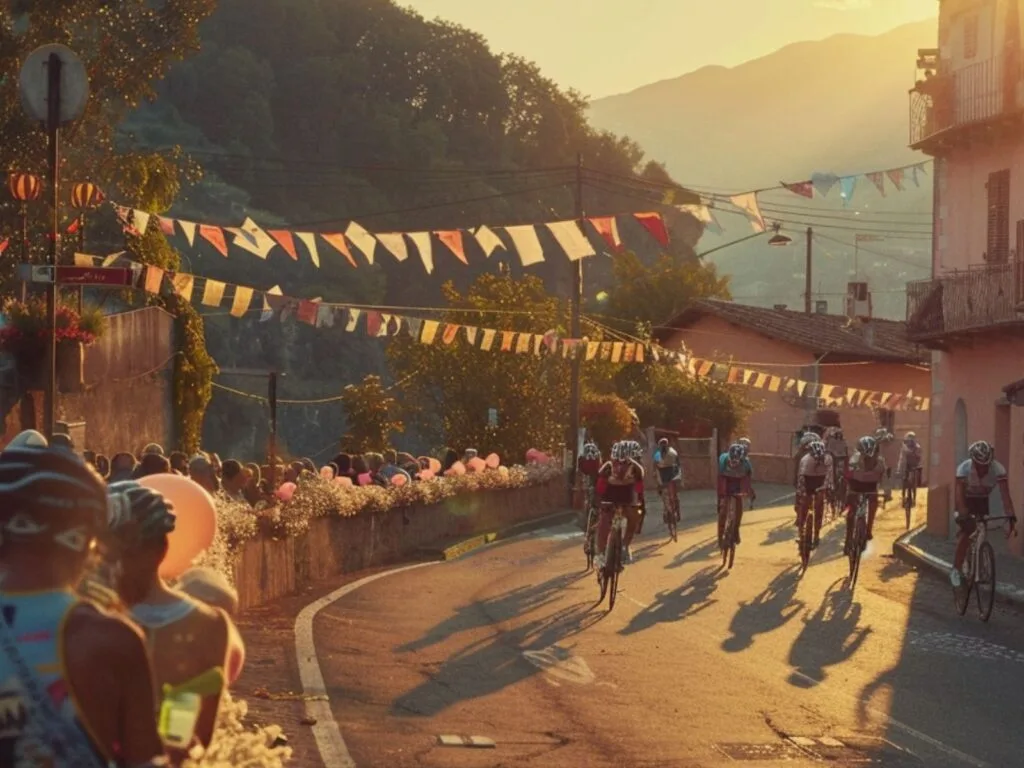
The 2026 Giro d’Italia once again showed how brands are increasingly using Grand Tours as large-scale marketing platforms rather than relying on traditional sponsorship visibility alone.
ASSOS and EF Pro Cycling launched their limited-edition “Ride In Peace” Giro collection, turning the team’s annual kit change into a global campaign moment. At the same time, Raisin temporarily joined the name of Team Picnic PostNL during the Giro to support its Italian market launch. Meanwhile, Red Bull strengthened its race presence through the Red Bull KM activation alongside its sponsorship of Red Bull-Bora-Hansgrohe. Together, the campaigns reflected a broader trend across cycling sponsorship: brands are increasingly building integrated storytelling, product launches and fan activations around the sport’s biggest events.
Netcompany INEOS: New Title Partner, Three Sponsors — and Already Back on the Market
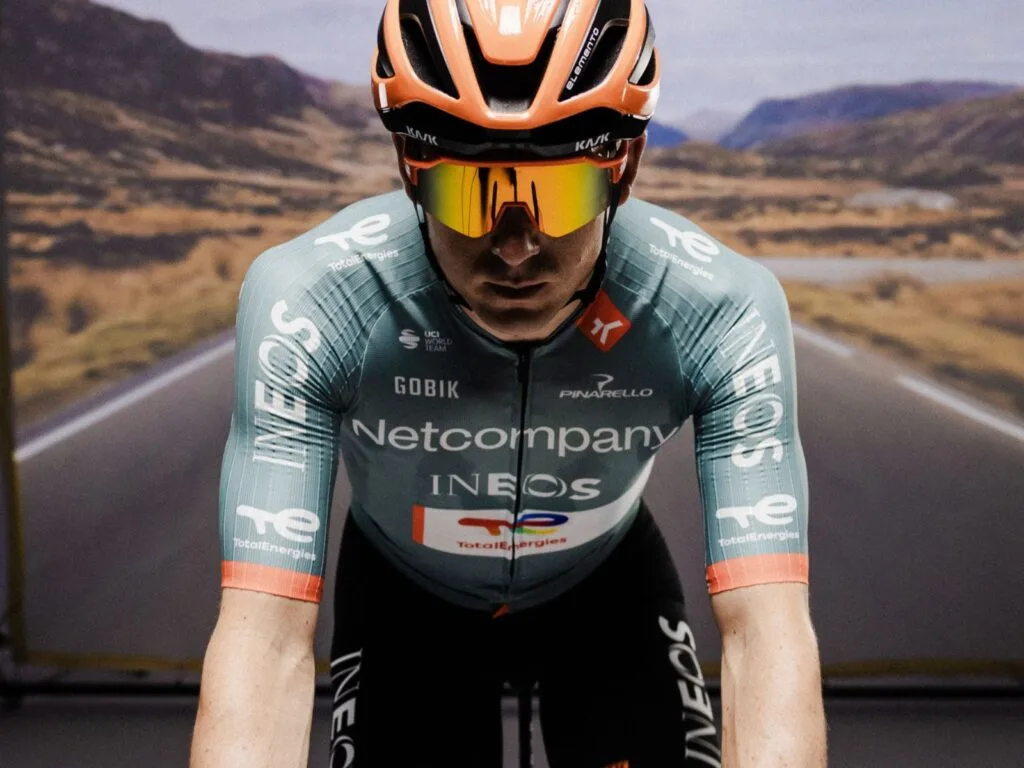
The biggest commercial story at INEOS Grenadiers in 2026 is the arrival of Netcompany as co-title partner. The Danish IT company signed a five-year deal built around PULSE, its real-time AI platform already deployed at Heathrow and Munich airports. From the start of the Giro d’Italia, the team races as Netcompany INEOS Cycling Team — with PULSE embedded across riders, staff and race operations to enable unified, real-time decision-making. The ambition is explicit: an eighth Tour de France.
Two further additions complete the picture. Café de Colombia joins as official coffee partner — a return to the WorldTour for a brand with deep roots in 1980s professional cycling, now aligned with Egan Bernal and a three-pillar activation strategy built around race presence, Colombian coffee culture and the growers behind the brand. WTW, a global advisory and risk management firm operating in over 140 countries, signs a three-year exclusive insurance partnership. CEO Carl Hess put the fit plainly: cycling is defined by risk, preparation and long-term outcomes — exactly the terrain WTW operates in. A full breakdown of all three partnerships is available in the Netcompany INEOS sponsor overview for 2026.
Seek for a second Co-Title Partner
The ink is barely dry, but the team is already looking for more. Chief Commercial Officer Tom Hill told the Leaders Worth Knowing podcast, as reported by Cyclingnews, that Netcompany INEOS is actively seeking a second co-title partner — and if found, INEOS could step back from the name entirely, leaving a “Netcompany-X” structure. The Netcompany deal runs at roughly €20 million annually, well short of the €60 million the team estimates it needs to compete with the sport’s top squads. INEOS owner Jim Ratcliffe, whose company carries close to €18 billion in reported debt, has reduced investment across its sports portfolio — though the team confirmed INEOS will remain a long-term backer.
GreenEDGE Adds New AI and Recovery Partners
The growing role of artificial intelligence in professional cycling sponsorship was visible once again in May. Following recent technology-focused partnerships elsewhere in the WorldTour, GreenEDGE Cycling announced a new agreement with AI.io, a company specializing in performance analytics, athlete development, motion capture and talent identification. The team also added Italian sleep specialist Manifattura Falomo to support rider recovery and wellbeing. Together, the partnerships highlight two categories that continue to gain momentum across the sport: AI-driven performance technology and recovery-focused brands. Both reflect a broader shift in team partner portfolios, where data, health and athlete optimization are becoming increasingly important alongside traditional equipment and nutrition sponsors.
Women’s Tour de Romandie Cancelled for 2026 Amid Sponsorship Challenges
The Women’s Tour de Romandie has been cancelled for 2026 after organisers cited a lack of sponsors and insufficient operational resources. The cancellation highlights the continued financial challenges faced by several women’s races despite rising visibility, audience growth and broader investment discussions around women’s cycling. The decision also underlines the gap between growing commercial interest at the top level of the sport and the long-term sustainability of smaller and mid-sized race properties within the women’s calendar.
The Cyclists’ Alliance Joins the UCI Governance Debate
The Cyclists’ Alliance — the rider-led organisation representing women’s professional cyclists — submitted its formal response to the UCI consultation process on 4 May 2026. Developed with Morgan Sports Law and signed by over 200 cosignatories, the letter sets out practical recommendations on professional pathways, safety standards, working conditions and broadcast access. It follows Rapha’s earlier public response to the UCI, and together the two submissions reflect a broadening stakeholder debate about the structural direction of professional cycling. The full letter is available in English, French and Spanish on the TCA website.
Tour de France 2028 Starts in Reims
After consecutive overseas Grand Départs in Barcelona and Edinburgh, the Tour de France returns to France in 2028. Reims will host the opening stage on 24 June, with four stages traversing the Grand Est region through Épernay, Charleville-Mézières, Verdun, Metz and Thionville before the race moves on. The early start date is driven by the Los Angeles Olympics, which begin on 14 July. Reims last held a Grand Départ in 1956. Stage profiles have not yet been published, though Christian Prudhomme flagged the Champagne hillsides around Épernay as terrain that could produce early general classification movement.
SNCF Joins Tour de France Partner Portfolio as E.Leclerc Expands Caravan Presence
While attention has already turned to the 2028 Grand Départ in Reims, recent announcements highlight that preparations for the 2026 Tour de France are well underway. The race confirmed a new three-year partnership with French railway operator SNCF through 2028. As part of the collaboration, riders and team staff will travel by high-speed train before the final stage in Paris this July, supporting the Tour’s wider sustainability ambitions. Meanwhile, long-time partner E.Leclerc launched a public search for the driver of a new giant cauliflower vehicle set to join the publicity caravan. Together, the announcements provide an early look at the partnerships and activations surrounding the upcoming edition of the race. For a broader overview of the race’s sponsor portfolio and commercial landscape, see our Tour de France sponsorship guide.
Zwift Acquires ROUVY — and Both Platforms Stay Independent
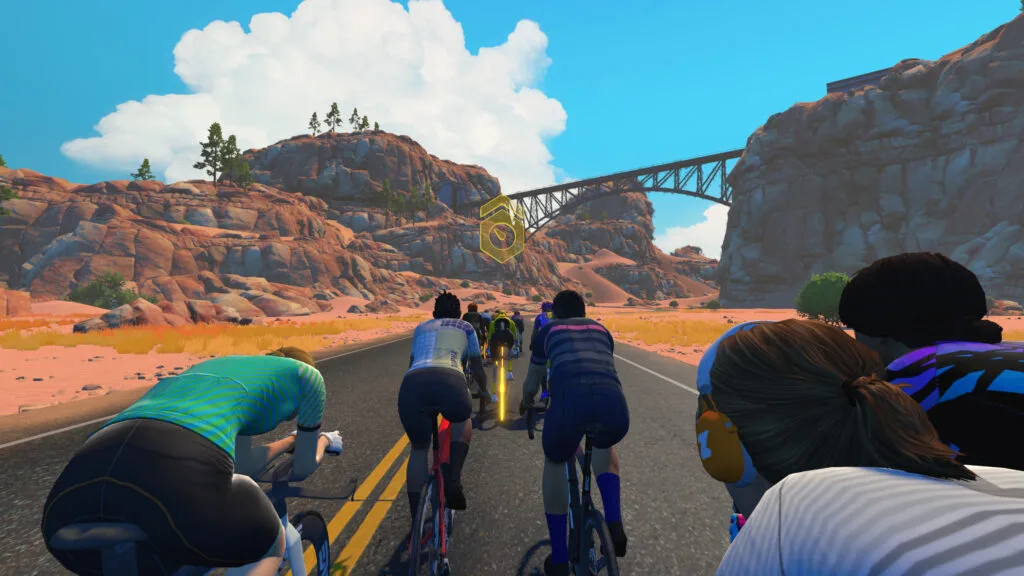
In one of the more significant business moves in the virtual cycling space this spring, Zwift completed the acquisition of ROUVY.
The two platforms continue to operate independently, with separate roadmaps and subscription packages — the commercial logic being that they serve genuinely different riders: Zwift built around gamification and community, ROUVY around real-route simulation and outdoor training.
Practically, the deal immediately unlocked Zwift Ready hardware for ROUVY users. For professional cycling’s commercial ecosystem, the acquisition brings together two platforms that have both invested in team partnerships as activation vehicles — ROUVY through structured training camp formats with Lidl-Trek and Visma | Lease a Bike, Zwift through team camp activations with the likes of Alpecin-Premier Tech. Read the full analysis.
Coffee Continues to Expand Beyond Traditional Sponsorship
The growing connection between coffee and cycling extended beyond team partnerships in May. Zwift and Italian espresso machine manufacturer Rocket Espresso launched a limited-edition co-branded espresso machine, bringing cycling culture directly into the premium home coffee market.
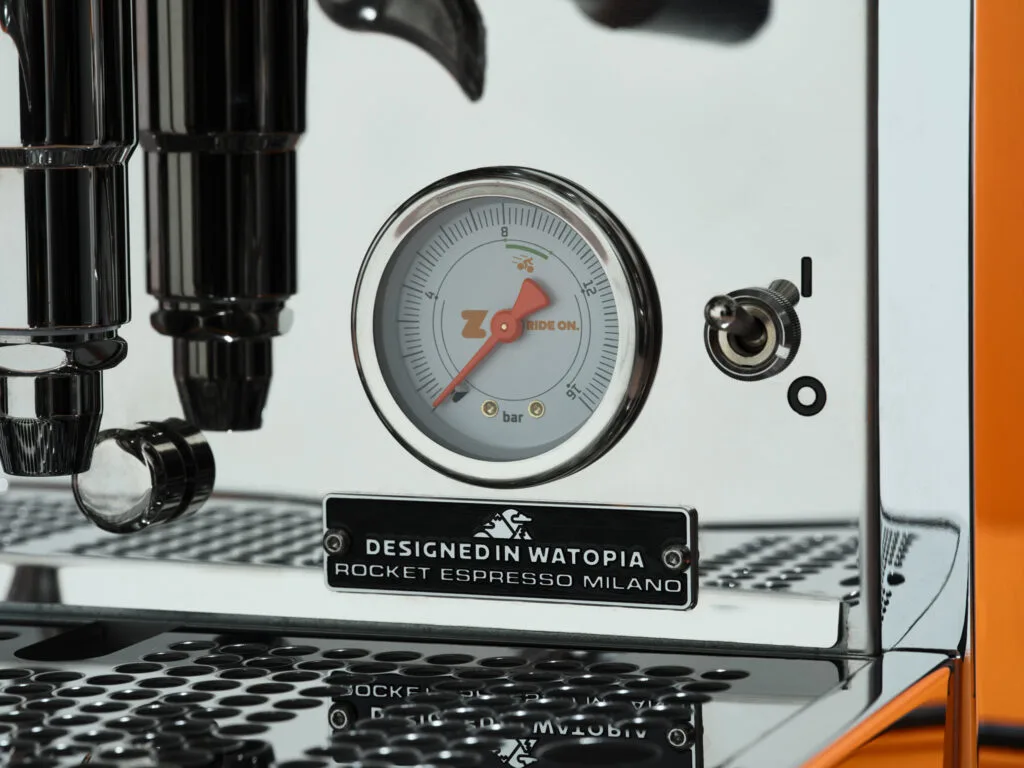
While not a sponsorship deal in the traditional sense, the collaboration highlights how coffee is evolving from a recurring sponsor category into a broader lifestyle element within cycling. It is another signal that brands increasingly see cycling not only as a sport, but as a community shaped by shared rituals and consumer habits.
Previous recap: Cycling Sponsorship April 2025

Get the Pro Cycling Commercial Recap. Monthly.
Curated insights on sponsorship, marketing and commercial developments in professional cycling.
No noise. One recap. Every month. Unsubscribe anytime.