Belgian Spring Classics: Unmatched in Broadcast, Unmatched at the Roadside
The Belgian spring classics occupy a rare position in the professional road calendar — a compressed block of racing that generates sustained media attention, roadside crowds and broadcast reach across seven weeks. Between late February and mid-April, Flanders Classics organises 15 races — 7 of which are held in both men’s and women’s editions — including Omloop het Nieuwsblad, Gent-Wevelgem, Dwars door Vlaanderen, the Tour of Flanders, Scheldeprijs and the Amstel Gold Race — in a block that few sporting properties anywhere in the world can match over a comparable timeframe.
For sponsors and brands looking for a platform that combines cultural depth, concentrated media exposure and direct fan engagement, the spring classics represent something difficult to replicate elsewhere in the calendar. Flanders Classics published audience and platform data following the 2026 season that puts concrete numbers behind what has long been understood intuitively by those closest to the sport.
A Peak Moment in the Cycling Calendar
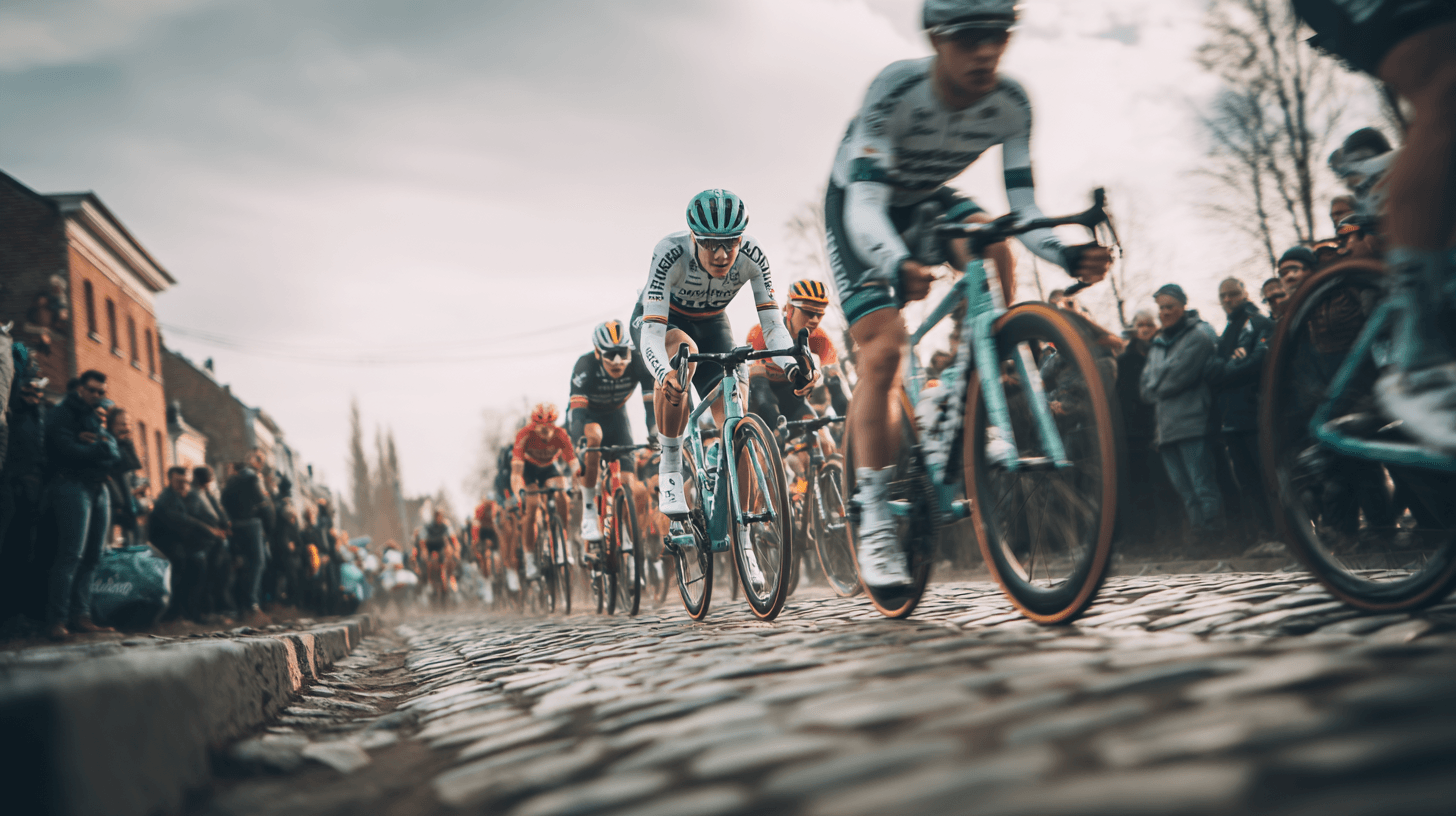
The Belgian spring classics occupy a rare position in the professional road calendar. Sportingly, they sit at the intersection of several storylines simultaneously. They are where season form is revealed after the winter, where the sport’s most physical and unpredictable racing happens — cobbles, crosswinds, short climbs, echelons — and where reputations are made or lost in a single afternoon. That combination gives the races a sporting weight that makes them appointment viewing in a way that few mid-season events manage.
The portfolio runs from Omloop het Nieuwsblad in late February through to Amstel Gold Race in mid-April. In between: Gent-Wevelgem, Dwars door Vlaanderen, the Tour of Flanders, Scheldeprijs, De Brabantse Pijl, Ronde van Limburg and more. Fifteen races. Roughly seven weeks. One sustained media event.
Belgium and Cycling: A Relationship Unlike Any Other
To understand why the spring classics matter commercially, you need to understand what cycling means in Belgium. The sport is not simply popular here. It is woven into regional identity in a way that has no real equivalent elsewhere in Europe. Flemish cycling culture runs from the Flandrien mythology — the image of the stubborn, gritty rider who suffers well — to the hundreds of thousands of fans who line the roads of the Oude Kwaremont, the Kemmelberg and the Wevelgem cobblestones every year, hours before the race arrives.
This is roadside engagement at a scale and intensity that broadcast figures alone do not capture. Families drive to three or four different points on the course. Villages turn into temporary fan towns. Hospitality across the region sells out weeks in advance. The Tour of Flanders is a regional public holiday in everything but name. In 2026, 978,472 VRT viewers watched Demi Vollering win the Tour of Flanders — a 78% market share. Belgian public television does not reach those numbers by accident.
What This Means for Sponsors
That cultural backdrop is what gives the Flanders Classics portfolio its commercial value. Sponsors are not buying access to an audience. They are buying into a cultural moment that recurs reliably every year, across 15 races, with a deeply engaged base of fans who follow the sport year-round and consume it across television, digital and physical touchpoints simultaneously.
The series also rewards sponsors who think in terms of brand building rather than pure impressions. Flanders Classics has developed a suite of commercial tools — from hospitality and race naming rights to the Digital Goodiebag and Fan Guides — that allow partners to engage at multiple levels across multiple surfaces. The 2026 FLCS Clubhouse, a five-day free activation format run during the week of the Tour of Flanders at Wintercircus Ghent, is one example of how Flanders Classics creates new engagement surfaces beyond the race itself. The KBC and Proximus renewals through 2028, the KPMG Closing the Gap programme extension, and the MyWhoosh presenting partnership at the FLCS Clubhouse — all confirmed or renewed in 2026 — are evidence that brands with serious long-term intentions treat the Flanders Classics portfolio as a core part of their sponsorship strategy, not an add-on. A full overview of the Flanders Classics sponsors for 2026 is available on Leadout.
The Numbers Behind the Platform
Following the 2026 spring season, Flanders Classics published a data summary on LinkedIn that gives a clearer picture of what the platform delivers at scale. Across the 15 races, the channels generated 52.3 million views, 7.87 million in reach and 1.88 million interactions. The portfolio added 33,900 new followers during the season. On YouTube alone, the races accumulated over one million views and nearly 40,000 hours of watch time since February. The best-performing single video crossed 1.1 million views.
The Instagram growth data by race is also instructive. Ronde van Limburg led with +16.6%, followed by Ronde van Vlaanderen at +15.8% and Amstel Gold Race at +13.3%. Even the smaller races in the portfolio generated meaningful audience growth during their race windows. On the partner-facing side, the Digital Goodiebag was claimed 13,850 times with 64,290 individual goodies selected — a direct measure of active partner engagement from fans who opted in. Fan Guides generated 61,524 unique downloads. These are not passive reach metrics. They are signals of an audience interacting with the commercial layer of the races.
The Spring Classics as a Sponsorship Category
Taken together, the sporting significance, the Belgian fan culture and the platform data make the Belgian spring classics one of the most complete sponsorship environments in professional sport. The window is short, which creates intensity. The culture is deep, which creates authenticity. And the commercial infrastructure is mature enough to offer partners structured activation rather than just visibility. For brands that want to be part of something — not just seen alongside it — the Flanders Classics spring season is one of the clearest answers cycling has to offer.
Sources

Working in cycling sponsorship, marketing or media?
Get the pro cycling commercial recap.
Curated insights on sponsorship, marketing and commercial developments in professional cycling.
No noise. One recap. Every month. Unsubscribe anytime.
Lates Instagram posts