
Last updated: 19 February 2026
Updates
19 February 2026 – Visma | Lease a Bike opens search for new title sponsor to stay in WorldTour top group
Team Visma | Lease a Bike is actively searching for a new title sponsor after Visma, the Norwegian software company, signalled it will not fund further budget growth ahead of a planned IPO. The team requires a new main partner contributing around €30 million to maintain its position among the WorldTour’s leading teams. The case illustrates how budget escalation at the top of the sport is now testing the limits of even long-standing title sponsorships.
Read the full analysis: Visma | Lease a Bike Searches for New Title Sponsor as WorldTour Budget Race Intensifies
9 February 2026 – EF Pro Cycling opens title sponsor search to expand WorldTour budget
EF Pro Cycling has launched a public search for a new title sponsor in order to expand its budget and compete with the largest WorldTour teams. The move illustrates how capital escalation increasingly forces teams to open naming rights as competitive infrastructure rather than incremental sponsorship expansion.
Read the full analysis: EF Pro Cycling title sponsor search
4 February 2026 – UCI relaunches reform discussions with stakeholders
The UCI announced following its Management Committee meeting in Beveren on 29–30 January 2026 that it would relaunch discussions on the future structure and economic model of professional road cycling. The governing body said it would consult teams, organisers and riders’ representatives on topics including calendar structure, race formats, broadcasting, internationalisation and revenue distribution.
The AIGCP (association of professional teams) welcomed the initiative and indicated it would participate in the process, stating that teams aim to improve long-term financial stability, media value and resource distribution while strengthening the global race calendar. The organisation said it would gather proposals from member teams to represent their position in discussions with organisers (AIOCC), riders (CPA) and the UCI. [12]
20 January 2026 — Team management calls for structural reform
Cyclingnews reported that during the Team Visma | Lease a Bike media day in La Nucía in January 2026, CEO Richard Plugge described the current economic framework of professional cycling as financially unstable and warned that continued reliance on sponsorship and reduced free-to-air television exposure could weaken long-term commercial value. He argued that the sport would require a more centralised commercial structure with more predictable revenues and greater media value, referencing models used in series such as Formula 1 and MotoGP. The comments followed renewed discussion about sustainability after the failed One Cycling initiative in 2025 and reflected broader concern among stakeholders about teams’ limited participation in core revenue streams. [11]
For a broader sponsorship overview across professional cycling, see the Pro Cycling Sponsorship Overview 2026 (PDF).
How professional cycling’s business model works today
In recent years, the business model of professional road cycling has increasingly become the subject of public discussion, particularly around sponsorship dependency, media rights and long-term financial sustainability. This debate is not confined to specialist media, but has also been shaped by statements from team managers, governing bodies, former riders and organisers in interviews, podcasts and social media.
Across these contributions, a consistent set of structural questions emerges: how teams generate revenue, who controls commercial rights, how rising costs are financed, and whether the existing model can sustain further professionalisation.
Working in cycling sponsorship, marketing or media?
Get the pro cycling commercial recap.
One edition per month. No noise.
A sponsorship-driven system with limited recurring revenue
At the centre of most reporting is the continued reliance of professional cycling teams on sponsorship as their primary source of income.
This reality was recently summarised in detail by ProCyclingUK, which described how teams operate in privately owned events without holding ownership stakes or commercial rights. [1] As a result, teams do not participate directly in revenues generated through ticketing, media rights or hospitality.
ProCyclingUK did not present this as a new discovery, but rather as a comprehensive description of structures that have been in place for many years: teams compete globally, yet remain financially dependent on sponsor contracts that are typically short-term and vulnerable to changes in corporate strategy.
This structural dependency is reflected in the current composition of the UCI WorldTour teams 2026, where naming structures, ownership models and partner portfolios again illustrate how teams adapt commercially at the start of the new licence cycle.
Tour de France: global scale without ticket income
The Tour de France is frequently cited as the most striking illustration of this structure.
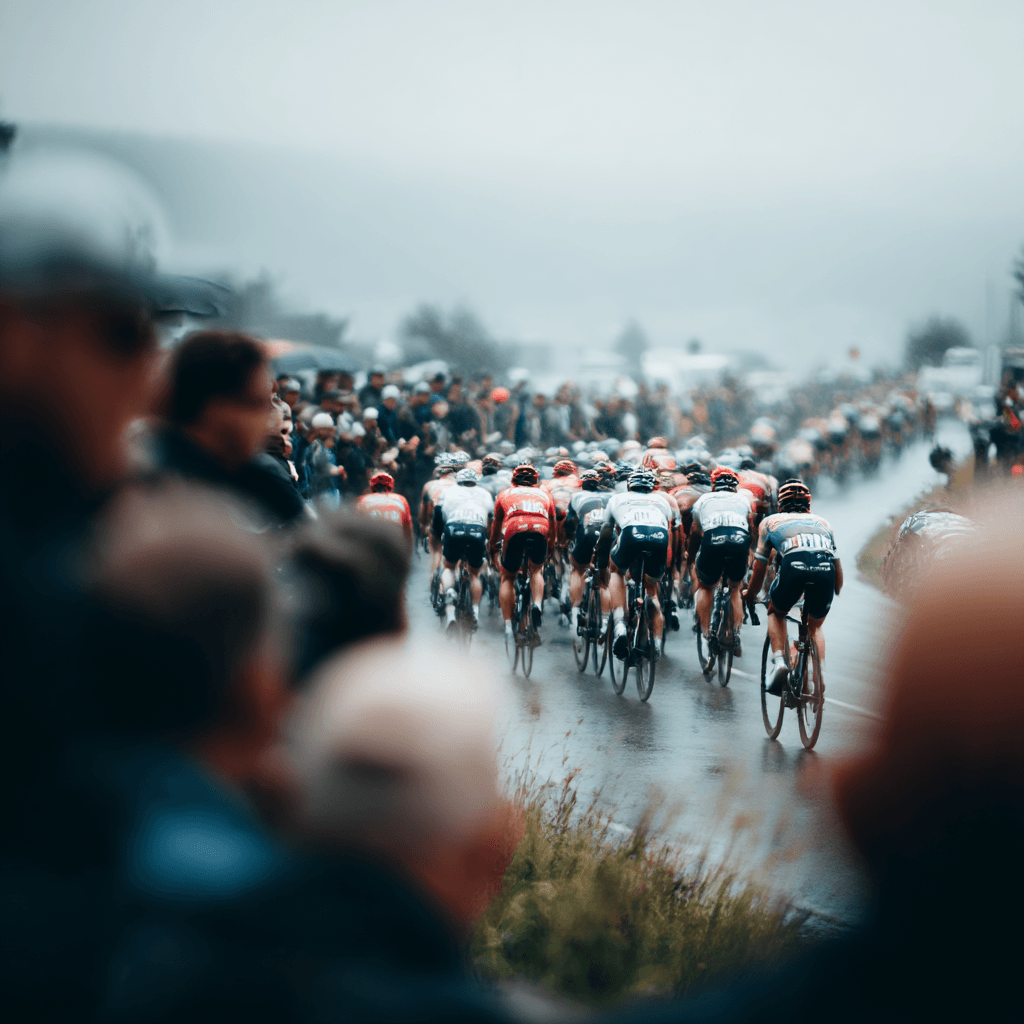
Widely described as one of the largest annual sporting events in the world, the Tour attracts millions of roadside spectators. At the same time, multiple outlets have noted that it operates almost entirely without ticket revenue.
Domestique Cycling reported that the Tour draws an estimated 12 million spectators along the route each year, yet maintains limited direct commercial or data-based relationships with them. [2]
Ticketing on iconic climbs: a public and contested idea
The absence of ticket income has become particularly visible in discussions about iconic mountain stages.
In 2025, Cyclingnews reported that former team manager Jérôme Pineau publicly suggested introducing ticketed access on climbs such as Alpe d’Huez. Speaking on French radio, Pineau argued that if fans were willing to pay for access, the resulting revenue should not accrue exclusively to organisers. [3]
The proposal prompted multiple public responses. ASO rejected the idea, with Tour de France race director Christian Prudhomme stating that roadside access should remain free and that ticketing on mountain stages was incompatible with the nature of the event. [3] UCI President David Lappartient was quoted in Ouest-France warning that paid access to the Tour would face “enormous resistance”. [4] Team managers including Marc Madiot of Groupama-FDJ were reported as emphasising that free access was part of the sport’s identity and should be preserved. [3]
Television rights and the absence of revenue sharing
Broadcast revenues in professional road cycling are retained entirely by race organisers, with teams receiving no share of television income.
Unlike closed or franchise-based leagues in other major sports, where teams participate in centralised media revenue as part of league membership, cycling teams compete in privately owned events without ownership rights or revenue guarantees.
Recent reporting reiterates that organisers view this structure as a direct consequence of event ownership and financial responsibility.
Rising budgets and cost pressure in the WorldTour
While revenue structures remain largely unchanged, costs continue to rise.
Cyclingnews reported that combined men’s WorldTour team budgets for the 2026 season amount to approximately €663 million, underlining continued financial escalation at the top level of the sport. [5] The same outlet noted that median male rider salaries have also increased, reflecting intensified competition for talent within a sponsorship-dependent system.
This dynamic has intensified concerns about sustainability, particularly for teams operating closer to minimum budget thresholds. Domestique Cycling and other outlets have documented how budget requirements for WorldTour licensing continue to rise, placing additional pressure on teams to secure long-term sponsorship commitments. [6]
The budget cap debate and its failure
In response to rising costs, a UCI-led budget cap was discussed between 2024 and 2025.
Bicycling reported on early plans to introduce spending limits in the men’s WorldTour. However, subsequent reporting by Escape Collective confirmed that teams rejected the proposal. [7]
UCI President David Lappartient was quoted as saying that teams themselves opposed the measure, effectively ending the initiative. According to the reporting, teams cited concerns about competitiveness and the practicality of enforcement as reasons for their opposition. [8]
One Cycling and alternative commercial models
Alongside cost-control discussions, alternative commercial concepts have also been reported.
Several outlets described One Cycling as a project involving teams, organisers and external investors, intended to explore new revenue models and a more centralised commercial structure. According to the reporting, the initiative seeks to create a framework that would allow teams to participate more directly in commercial revenues. [9]
The reporting also noted tensions with the Union Cycliste Internationale, which declined to integrate the project into the official WorldTour calendar for 2026 and warned of potential regulatory consequences. The UCI’s position, as reported, centres on maintaining control over the sport’s calendar and regulatory framework. [10]
Women’s professional cycling as a structural indicator
Declining Women’s WorldTour team numbers despite rising standards
Developments in women’s professional cycling have been cited in several reports as an indicator of broader structural pressures.
For the 2026 season, the number of UCI Women’s WorldTour teams will decrease from 15 to 14.
This reduction comes despite increasing professional requirements and an expanded race calendar. There are seven Women’s ProTour teams. Several projects were discontinued due to economic reasons.
Professionalisation concentrated among a limited group of teams
Just over a handful of teams, such as UAE Team ADQ, Team Visma | Lease a Bike, EF Education–Oatly, and Uno-X Mobility, represent professional and growing structures and environments, often operating under the umbrella of organisations already established in men’s professional cycling.
These teams benefit from shared infrastructure, operational expertise and existing sponsor relationships, according to multiple outlets.
Financial and licensing pressure on independent teams
At the same time, many other teams face challenges in meeting rising budget and licensing requirements. Cyclingnews and other sources have documented cases of teams withdrawing applications or folding entirely, with sponsorship security remaining a decisive factor in their viability.
The pattern described in the reporting suggests that professionalisation in women’s cycling is advancing unevenly, concentrated among teams with access to established organisational structures, while independent teams face higher barriers to entry and sustainability.
Structural Warning Signs in Women’s Professional Cycling
Natascha Knaven-den Ouden, founder of NXTG Racing, a UCI Women’s Continental team (the second tier of women’s professional cycling) analysed the current situation in a LinkedIn post. She points out that the Women’s WorldTour has shrunk from 15 teams to 14, with conditional licences and financial instability among some teams, and argues that the layer below — just seven Women’s ProTeams — is structurally weak and lacks depth.
According to Knaven-den Ouden, the sport has prioritised rapid top-tier expansion and financial equality without sufficient organisational strength, development pathways, or long-term stability, resulting in an overstretched system that cannot sustain true growth.
A debate defined by structure rather than results
Across the reporting, the debate consistently centres on structure rather than sporting performance. Rising budgets, expanding calendars and growing professionalism coexist with a commercial model that continues to rely heavily on sponsorship and excludes teams from key revenue streams.
As the sources show, current discussions—from ticketing and television rights to budget caps and alternative league concepts—reflect ongoing uncertainty about whether professional cycling’s existing economic framework can sustain its continued growth and professionalisation demands.
The reporting to date suggests that while various proposals have been advanced by different stakeholders, no consensus has emerged on fundamental structural reform. Teams, organisers and the governing body remain positioned differently on questions of revenue distribution and commercial control, with no resolution currently in sight.
For a broader market overview, see our analysis of cycling sponsorship in professional cycling.
Sources:
[1] ProCyclingUK – How cycling’s outdated business model risks breaking the men’s peloton https://procyclinguk.com/how-cyclings-outdated-business-model-risks-breaking-the-mens-peloton/
[6] https://www.domestiquecycling.com/en/budgets-of-worldtour-teams/
[7] https://escapecollective.com/exclusive-the-uci-is-exploring-a-budget-cap/
[8] https://www.tour-magazin.de/profi-radsport/aktuelles/budgetobergrenze-in-der-worldtour-gescheitert/

Working in cycling sponsorship, marketing or media?
Get the pro cycling commercial recap.
Curated insights on sponsorship, marketing and commercial developments in professional cycling.
No noise. One recap. Every month. Unsubscribe anytime.
Lates Instagram posts