Update Jan 12, 2026: As the current edition concludes today, the focus shifts to a major milestone: The organizers have officially announced the 60th anniversary for 2027. This signals long-term commercial stability and a commitment to a business model where tradition meets entertainment.
Tradition, ticketing and economic pragmatism in track cycling
At a time when professional cycling is increasingly searching for new revenue streams, the debate around charging admission briefly returned to the spotlight. In late 2025, proposals to introduce ticketing for iconic Tour de France mountain stages gained short-lived attention before being abandoned once again. The idea was ultimately not pursued, underlining how reluctant road cycling remains to fundamentally rethink access to its roadside audiences.
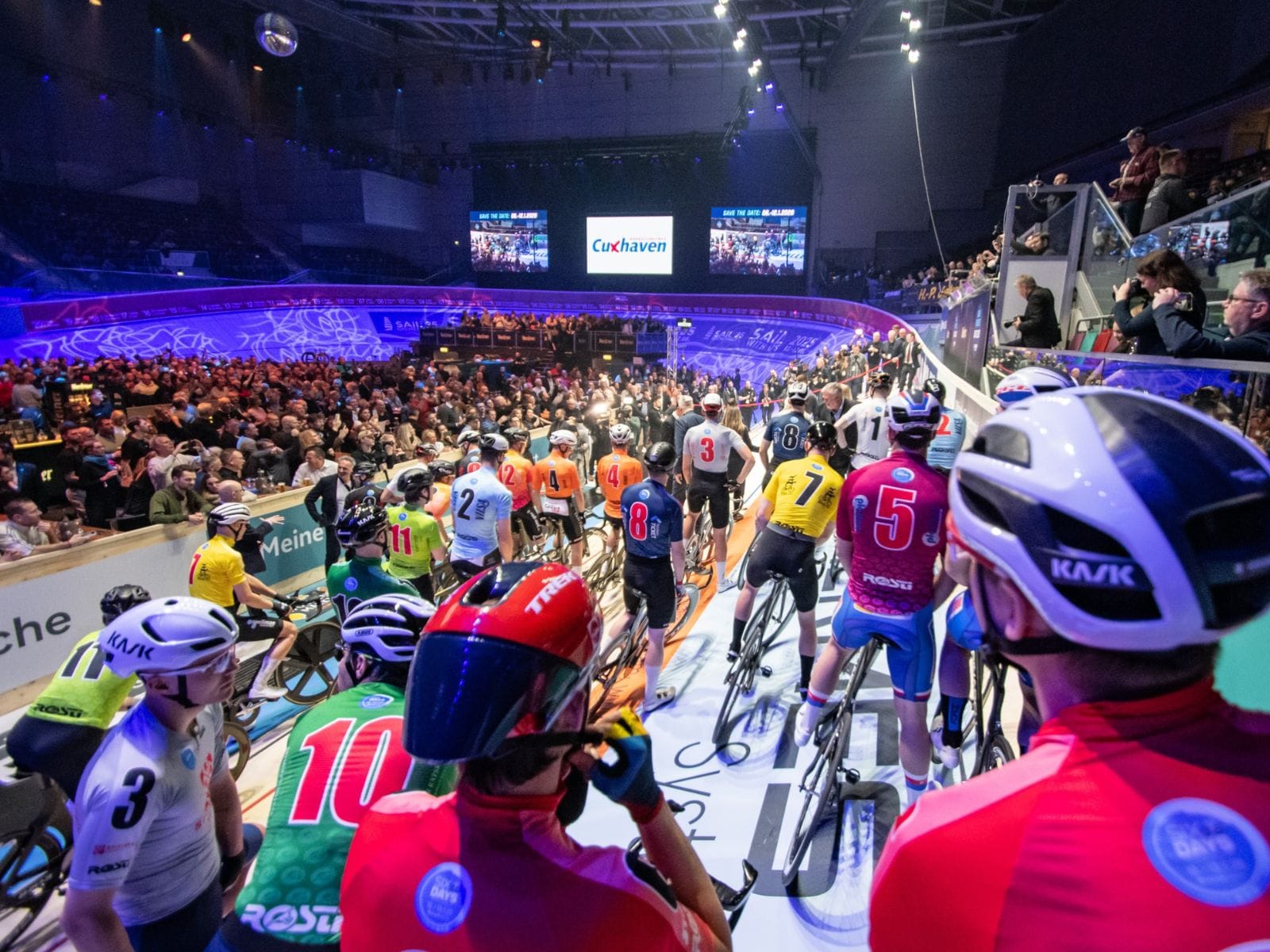
Events such as Antenne Schlager Sixdays Bremen, which took place from January 9 to 12, 2026, are built around enclosed venues, controlled access and a clearly staged live experience. For decades, ticket sales and local sponsorship have been structural components of their business models. The successful staging of this year’s edition, while many other historic six-day races have disappeared, proves that this approach remains viable in specific contexts, even when facing clear economic and structural limits.
From early origins to modern track cycling
The first six-day cycling races took place as early as the 1870s. What began as individual time-based competitions quickly evolved into a mass spectator phenomenon. The six-day duration had a pragmatic reason: it avoided racing on Sundays and therefore respected local laws and religious beliefs.
The role of the United States and the Madison format
Six-day racing reached peak popularity in the United States. The modern two-rider team format emerged at Madison Square Garden, which is why this style of racing is still known today as “Madison.” During its golden era, particularly between the World Wars, six-day races attracted tens of thousands of spectators and became major social events.
The transformation of the six-day landscape: when six no longer means six
The six-day racing landscape has changed dramatically. Many traditional events vanished entirely, while others adjusted their formats to remain financially viable. Today, only Ghent and Rotterdam still stage full six-day events.
Shortened formats as an economic compromise
The economic challenges are significant. Six-day races are complex entertainment spectacles involving live music, extensive side programs and demanding infrastructure. As a result, many historic events now run shorter formats:
- Ghent (Belgium): 6 days
- Rotterdam (Netherlands): 6 days
- Bremen (Germany): 4 days
- Geneva (Switzerland): 4 days
- Copenhagen (Denmark): 3 days
- London (UK): 3 days
- Berlin (Germany): 2 days
This evolution shows that “Six Days” has become a brand, detached from the actual race duration. The UCI formally acknowledged this reality by abolishing the requirement for six-day events to last six days from 2025 onward.
Sixdays Bremen: a success story since 1965
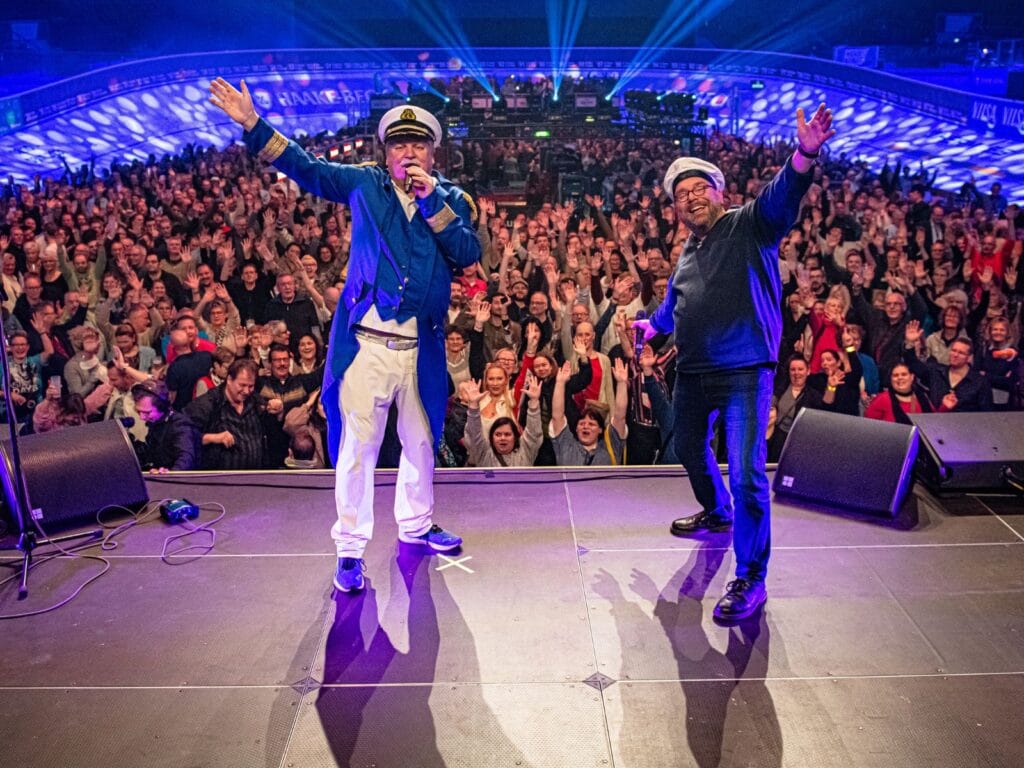
Within this changing environment, Sixdays Bremen has managed to hold its ground. Although the first Bremen six-day race took place in 1910, the continuous tradition began in 1965 when the event was revived in the newly built Stadthalle Bremen.
Since then – with the exception of the pandemic-related break from 2021 to 2023 – the race has been a fixed part of Bremen’s annual event calendar.
A track with a distinctive character
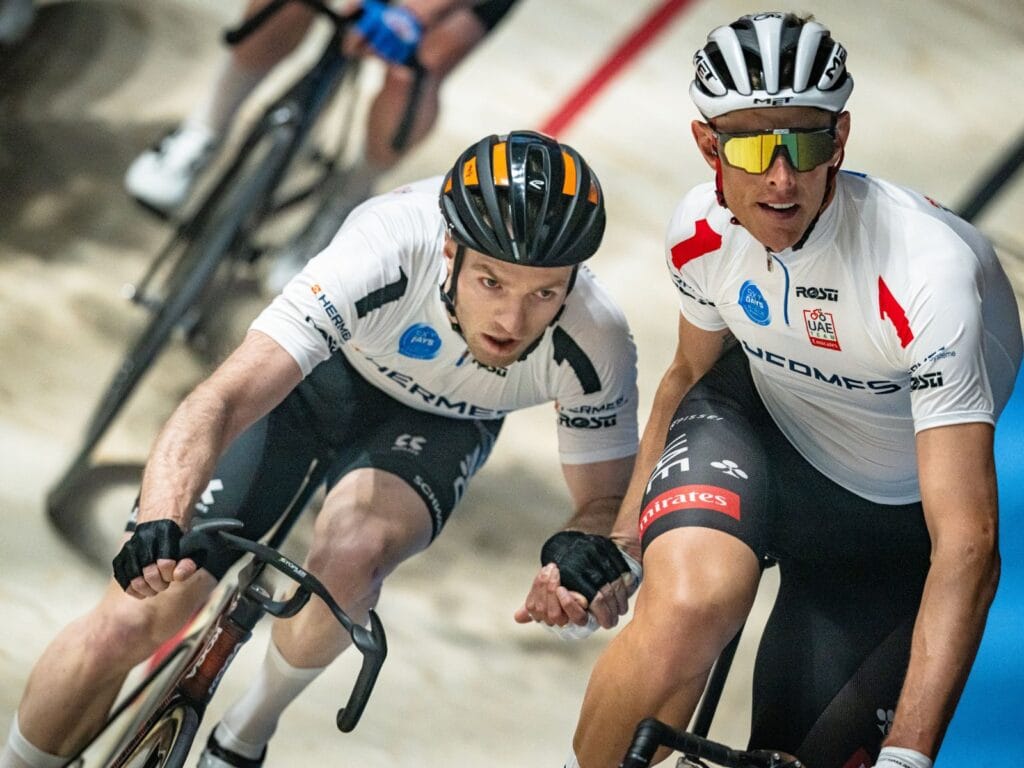
At just 166.6 meters in length, the Bremen track is one of the shortest six-day tracks in the world. At the same time, with banking angles of up to 58 degrees, it is also one of the steepest. This combination creates a highly spectacular experience for both riders and spectators.
Sporting credibility on and off the track
From a sporting perspective, the 2026 edition further reinforces the event’s relevance. The presence of riders such as Nils Politt, Roger Kluge and Moritz Augenstein, alongside several international talents, underlines Six Days Bremen’s continued ability to attract high-level athletes across road and track disciplines.
The live experience is complemented by established presenters, including Robert Bengsch (commentator for Eurosport and Discovery+) and Franco Marvulli(a long-time fan favourite in Bremen during his racing career), combining broadcast expertise with elite sporting credibility.
Tickets, sponsorship and experience
Unlike most road races, which rely heavily on broadcast rights and global sponsors, six-day events follow a structurally different approach that contrasts with the business models of professional cycling.
Ticket revenue as an accepted foundation
For Sixdays Bremen, ticket sales are not a controversial innovation but a long-established pillar of financing. Spectators pay for an overall experience that goes far beyond watching a sporting contest.
Local sponsorship and regional anchoring
Local sponsorship plays a central role alongside ticket revenue. Regional companies use Six Days Bremen as a platform to strengthen their presence within the city and surrounding region. This strong local connection provides stability and embeds the event firmly within Bremen’s regional identity.
New title sponsor
In this context, the 2025 edition marked an important milestone: for the first time in several years, Sixdays Bremen secured a title sponsor with Antenne Schlager, a Germany-based radio station with a strong regional audience. The partnership underlines the event’s renewed attractiveness for regional media brands and highlights how strong local reach and live audience engagement remain compelling assets in the six-day racing model.
Adapting to changing conditions: from six days to four

After the pandemic-related hiatus, Sixdays Bremen returned in 2024 with a revised four-day format, running from Friday to Monday. This change was not an emergency measure but a strategic decision.
Economic efficiency and higher intensity
Shorter events reduce costs for venues, staffing and athletes while increasing the intensity and density of the sporting experience. Despite the format change, Bremen is still widely regarded as a six-day race – a status reinforced by the UCI’s regulatory update and the strength of the “Six Days” brand.
Why ticketing works in track cycling – but not in road cycling
The abandoned idea of charging admission for Tour de France mountain stages highlights the fundamental differences between disciplines. Road races take place in public spaces, are experienced only briefly at specific points, and would be extremely difficult to control logistically.
Six-day races, by contrast, take place in enclosed arenas. They allow organisers to curate a complete, multi-hour experience that combines elite sport, entertainment and atmosphere. This structural difference explains why ticketing works in track cycling and not in road cycling.
Key success factors at a glance
- Creating added value: sport alone is not enough.
- Local integration: strong regional sponsors and audiences.
- Continuity and adaptability: tradition combined with flexibility.
- Sporting quality: top athletes ensure credibility and appeal.
- The central takeaway: added value turns spectators into paying audiences
The central takeaway remains clear: spectators are willing to pay when the added value is right. Formats like Sixdays Bremen succeed because they combine sport, atmosphere and a clearly staged live experience into something that goes beyond pure competition. A similar logic can be observed in cyclocross, where enclosed venues, intense racing and festival-like settings have long made ticketed access both accepted and economically viable.
Whether such a model can be transferred to road cycling remains uncertain and, ultimately, a question of intent. For now, the most recent debate around charging admission at major road races appears to have subsided, suggesting that the sport is not yet ready – or willing – to fundamentally rethink access to its roadside audiences.
Yet even successful formats must continuously adapt. The story of Sixdays Bremen is therefore not one of uninterrupted success, but of compromise – and precisely that is its strength.
2027: The 60th Anniversary as a Strategic Anchor
The official announcement of the 60th anniversary for 2027, following the successful conclusion of the January 9–12 races, serves as a powerful signal of commercial resilience. For sponsors and B2B partners, this milestone represents more than just a celebration of longevity; it functions as a strategic anchor that provides planning security in a volatile event market.
By leveraging its 60-year history, the Sixdays Bremen offers brands a stable and proven platform that blends deep-rooted tradition with modern networking opportunities. This long-term perspective confirms that the event’s business model remains a vital and reliable asset for regional and national brand activation.
What Sixdays Bremen illustrates – and what it does not
Sixdays Bremen demonstrates that ticket-based cycling events can work when specific conditions are met. A strong local identity, an enclosed venue and a format that combines sport with entertainment create an experience for which audiences are willing to pay.
At the same time, the disappearance of many historic six-day races highlights the limits of this model. It is not universally transferable, nor does it scale easily beyond its context. Bremen’s strength lies precisely in this balance: long-term continuity paired with the willingness to adapt to economic realities.
Sources
https://www.tour-magazin.de/profi-radsport/aktuelles/bremer-sixdays-2024-neuauflage-mit-erfolg
https://www.cyclingweekly.com/news/six-day-events-no-longer-have-to-last-six-days-uci-rules
https://en.wikipedia.org/wiki/Six-day_racing (Six day history)
Lates Instagram posts