This page outlines the professional cycling sponsorship landscape. It explains how team-based sponsorship models are structured, how brands engage with the sport, and how partnerships are activated across teams, events and media platforms.
The Economic Foundation of Professional Cycling
Cycling sponsorship forms the economic foundation of professional road cycling. Unlike sports with centralised league structures, the sport depends almost entirely on long-term brand partnerships negotiated at team level. These partnerships finance sporting performance, organisational stability and global visibility across a year-round international race calendar.
For a detailed breakdown of the economic structure and revenue logic of professional cycling, see our article The Business Model of Professional Cycling Explained.
The Structure of Cycling Sponsorship
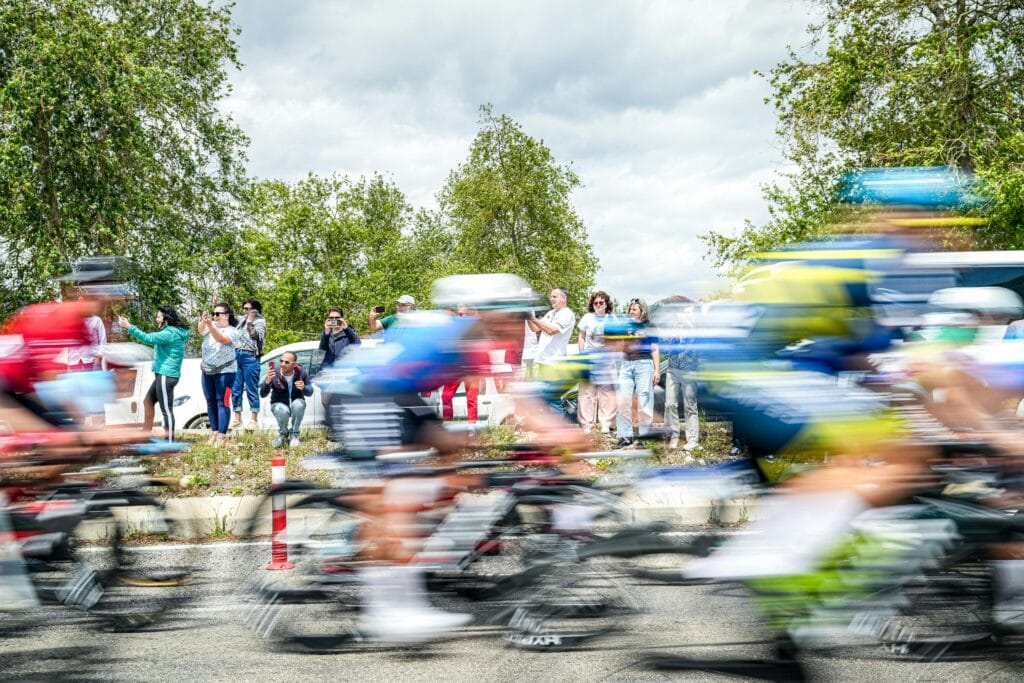
Professional road cycling operates on a team-centred sponsorship model. Teams function as the primary commercial platforms, with title sponsors typically providing the majority of funding. These relationships are complemented by a broader network of technical, equipment, apparel and service partners. Cycling sponsorship is decentralised. Commercial agreements are negotiated individually by teams, often across multiple seasons, with exposure distributed across races, broadcast coverage, digital media and social platforms.
Unlike event-driven sponsorship models, value in cycling is built through continuous presence rather than short-term campaign peaks.
Equipment sponsorship plays a particularly important role in this structure. Brands benefit not only from logo visibility, but from repeated and visible product usage in competitive environments, reinforcing credibility, performance association and long-term brand positioning.
For detailed team-level sponsorship structures (2026 season), see:
→ UCI WorldTour Teams (Men)
→ UCI Women’s WorldTour Teams
Title Sponsorship Landscape 2026
Title sponsorship represents the highest level of commercial investment in professional road cycling. Title sponsors typically define team identity, provide the majority of funding and commit to multi-year partnerships.
Looking at title sponsors of the UCI Worldtour Teams 2026 (WTT) by industry offers a clear view of which markets currently invest most strongly in professional cycling.
| Market | Number of title sponsors | Sponsors |
|---|---|---|
| Retail & E-Commerce | 4 | Decathlon, Lidl, Intermarché, Picnic |
| Construction & Industrial Materials | 4 | Quick-Step, Soudal, Hansgrohe, BORA |
| Technology & Digital Platforms | 3 | Visma, EasyPost, Movistar |
| Energy & Utilities | 3 | Premier Tech, Uno-X, XRG |
| Mobility & Automotive | 3 | INEOS Grenadier, Jayco, Lease a Bike |
| Healthcare, Wellness & Pharma | 2 | Alpecin, INEOS Hygienics |
| Logistics & Transport | 2 | CMA CGM, PostNL |
| Travel & Tourism | 2 | Emirates, AlUla |
| Government & Institutions | 2 | Bahrain, Astana |
| Bike & Equipment | 2 | Trek, XDS |
| Lotteries | 2 | FDJ United, Lotto |
| Food & Beverage | 1 | Red Bull |
| Finance & Insurance | 1 | Groupama |
| Services & Education | 1 | EF Education First |
| Total | 30 | — |
Across 18 men’s WorldTour teams, a total of 30 title sponsors are active. The distribution illustrates the prominence of consumer-facing industries and construction-related brands, while technology, mobility, healthcare and energy sectors underline cycling’s role as a long-term branding platform across both B2C and B2B markets.
For full 2026 title sponsor breakdowns by team, see: UCI WorldTour Teams (Men)
Source: Lead Out database. Based on publicly available information from press releases, official team announcements and company websites. (Classification by primary industry focus of the title sponsor.)
For a broader market context beyond team-level data, see the Pro Cycling Sponsorship Overview 2026 (PDF).
Key Stakeholders in the Cycling Sponsorship Ecosystem
Teams
Professional teams are the central assets in cycling sponsorship. WorldTour and Women’s WorldTour teams offer year-round international exposure, athlete storytelling and consistent brand presence across multiple markets. Sponsorship attractiveness is closely linked to sporting ambition, organisational stability and the clarity of a team’s long-term project.
Lead Out tracks the evolving team landscape, including the structure of the WorldTour teams and Women’s WorldTour teams ahead of the 2026 season.
Brands
Cycling sponsorship attracts brands from a wide range of industries, including apparel and equipment manufacturers, technology and digital platforms, finance, mobility, nutrition and consumer goods. Brand objectives vary: some seek global reach, others prioritise credibility, innovation or alignment with cycling’s performance-driven culture and audience.
For a structured framework of sponsorship activation models and value creation mechanisms, see: Sponsorship Activation in Pro Cycling
Events and Media
Races, broadcasters and digital platforms act primarily as amplifiers of team sponsorship rather than standalone commercial centres. While event sponsorship exists, long-term brand value is typically generated through team partnerships that persist across multiple races, seasons and media channels.
For detailed analysis of event-level sponsorship and media impact, see:
→ Tour de France Sponsors
→ Tour de France Media Reach
Sponsorship Activation & Value Creation
Cycling sponsorship extends well beyond logo placement. Effective partnerships increasingly focus on sponsorship activation: storytelling, athlete integration, digital content, community engagement and platform-based initiatives.
Technology and equipment partners often activate through performance narratives and product validation, while consumer brands emphasise authenticity, credibility and long-term association with the sport. As media consumption evolves, digital and platform-driven activation has become an increasingly important component of cycling sponsorship strategies.
These activation patterns tend to develop over time and reflect broader shifts in marketing priorities, media formats and audience behaviour within the cycling ecosystem.
For a structured activation framework, see:
→ Sponsorship Activation in Pro Cycling
Working in cycling sponsorship, marketing or media?
Get the pro cycling commercial recap.
One edition per month. No noise.
Virtual Cycling, Performance Apps & Digital Touchpoints
Digital platforms increasingly extend the commercial environment of professional cycling beyond live racing. Virtual training platforms, performance apps and connected data ecosystems create additional sponsorship touchpoints throughout the season, independent of race calendars.
Unlike traditional team-based exposure, platform-based sponsorship enables continuous brand integration through training environments, data interfaces and community engagement. This development reflects a broader shift toward digital infrastructure as a complement to race-centred visibility.
For a detailed analysis of virtual training platforms, performance apps and sponsorship touchpoints, see:
→ Virtual Cycling: Digital Training Platforms, Performance Apps and Sponsorship Touchpoints
Technical & Performance Sponsorship Ecosystem
Technical and performance-oriented partners form a distinct layer within the professional cycling sponsorship ecosystem. Unlike title sponsors, these brands are directly integrated into the sporting product: bicycles, components, apparel, nutrition, data systems and performance tools.
Their value is built through functional use, credibility and performance validation rather than pure media visibility. This segment includes equipment suppliers such as drivetrain and wheel manufacturers, apparel brands shaping team identity, and performance nutrition partners supporting athlete output.
While structurally embedded within the team-based model, technical and performance partners follow their own sponsorship logic: product integration, innovation cycles, co-development and long-term credibility building.
For a structured overview of technical and performance-oriented sponsorship models in professional cycling, see:
→ Technical & Performance Sponsorship in Pro Cycling
Events & Media Amplification
Professional road cycling is structured around team-based sponsorship, but flagship events act as powerful commercial amplifiers within this system. While teams serve as the primary commercial assets, global races concentrate media attention and significantly increase brand visibility over short periods.
Unlike league-based sports, event sponsorship in cycling typically reinforces team partnerships rather than replacing them. The value of event-level exposure lies in its ability to intensify reach, narrative impact and international awareness within a condensed timeframe.
The Tour de France as Commercial Multiplier
The Tour de France represents the most influential media environment in professional cycling. Its global broadcast distribution, sustained daily coverage and international audience concentration make it a disproportionate value driver for sponsors — both at team and event level.
For a detailed analysis of Tour de France sponsor structures and media impact, see:
→ Tour de France Sponsors
→ Tour de France Media Reach
Structural Trends & Market Evolution
Several long-term trends characterise the cycling sponsorship market. Multi-year agreements remain the dominant model, reflecting the need for stability on both team and brand side. Sponsor continuity is often valued more highly than frequent partner changes, particularly at title-sponsor level.
At the same time, the mix of industries involved in cycling sponsorship continues to evolve. Technology-driven, data-centric and platform-based brands play a growing role, while more traditional sponsorship categories adapt their activation strategies to changing audience expectations and media environments.
Viewed at market level rather than deal by deal, cycling sponsorship reveals recurring patterns in investment horizons, partner retention and activation logic across teams and competitions.
Men’s and Women’s Professional Cycling
Cycling sponsorship operates across both men’s and women’s professional road cycling, but with different structural conditions.
Men’s WorldTour teams typically operate with larger budgets, longer sponsorship histories and more established commercial frameworks. Women’s WorldTour teams, while increasingly professionalised, often face different market dynamics, shorter sponsorship cycles and evolving media exposure.
Understanding cycling sponsorship today requires viewing both segments together — not as identical markets, but as interconnected parts of the professional cycling ecosystem.
For detailed 2026 team-level sponsorship structures and title sponsor breakdowns, see:
→ UCI WorldTour Teams (Men)
→ UCI Women’s WorldTour Teams
How Lead Out Observes Cycling Sponsorship
Lead Out observes cycling sponsorship as an ongoing market. Coverage tracks sponsorship deals, renewals, partner exits and brand activations across men’s and women’s professional road cycling, with a focus on structure and context rather than isolated announcements.
The objective is to make cycling sponsorship more transparent, comparable and understandable for brands, teams, agencies, media and industry professionals by identifying patterns, relationships and long-term dynamics that shape the market.
Selected Analysis & Coverage
A curated selection of analysis and reporting related to cycling sponsorship and partnership structures in professional road cycling


Working in cycling sponsorship, marketing or media?
Get the pro cycling commercial recap.
Curated insights on sponsorship, marketing and commercial developments in professional cycling.
No noise. One recap. Every month. Unsubscribe anytime.