

Cycling performance technology refers to indoor cycling apps, training software, smart trainers and connected wearables used in professional cycling. This page analyses how these digital platforms operate as infrastructure and as sponsors within the cycling sponsorhip landscape.
What Is Cycling Performance Technology?
Cycling performance technology describes the digital infrastructure that supports training, performance analysis and coaching in professional cycling.
It includes indoor cycling apps, cycling training software, smart trainers, connected wearables and data-driven performance systems used by teams and athletes on a daily basis.
Cycling performance technology is characterised by:
- integration into regular training and preparation workflows
- continuous data collection and performance monitoring
- software–hardware connectivity across platforms
- brand visibility embedded within functional systems rather than surface-level media placement
Unlike traditional equipment categories, cycling performance technology operates primarily as infrastructure. It structures how teams train, analyse and optimise performance — and increasingly how sponsors integrate into professional cycling ecosystems.
You can find a detailed breakdown of segment distribution, country concentration and leading brands in the latest analysis of WorldTour cycling performance technology sponsors in 2026.
Why Cycling Training Platforms and Performance Apps Matter for Sponsorship
Cycling training platforms and performance apps matter because they shift sponsorship from surface-level visibility to process-level integration.
Indoor cycling apps, cycling training software and connected performance systems are used year-round — often daily — by professional teams and athletes. Brands integrated into these environments appear during preparation, data analysis and performance decision-making, not only around competition.
For sponsors, this technology layer enables:
- repeated exposure through continuous platform usage
- association with performance, expertise and technical credibility
- integration into athlete and coaching workflows rather than passive placement
As a result, sponsorship within cycling training platforms and performance apps operates closer to relationship and performance marketing than to classic awareness-driven sponsorship.
Cycling Performance Technology sits within the broader structure of cycling sponsorship and sponsorship activation in professional cycling.
Cycling Performance Technology in the WorldTour Sponsorship Landscape
Within the UCI WorldTour, cycling performance technology has emerged as a clearly identifiable sponsorship segment alongside equipment, apparel, nutrition and service partners.
Indoor cycling apps, cycling training software, smart trainers and connected wearables now represent one of the most prominent non-material technology categories across men’s UCI WorldTOur Teams and UCI Women WorldTour teams. Their presence has increased steadily in recent seasons, particularly in analytics-driven and performance-oriented partnerships.
This development reflects a broader structural shift:
sponsorship value is increasingly created inside digital training platforms and performance systems, not only on physical race assets or traditional media exposure.
Working in cycling sponsorship, marketing or media?
Get the pro cycling commercial recap.
One edition per month. No noise.
Indoor Cycling Apps and Training Software as Sponsors in Professional Cycling
Beyond their role as digital training infrastructure, indoor cycling apps and cycling training software increasingly appear as active sponsors in professional road cycling.
In recent seasons, the share of performance technology brands — including indoor cycling platforms, training software providers and connected smart trainer ecosystems — has grown steadily within the UCI WorldTour. These companies no longer operate solely behind the scenes. Instead, they use professional cycling as a visibility, credibility and market positioning channel.
A clear indicator of this shift is the prominence of training software brands within team sponsorship structures. Among more than 600 sponsors across UCI WorldTour men’s and women’s teams in 2026, performance platform providers now rank among the most widely represented non-equipment categories — in some cases surpassing long-established component manufacturers.
This development illustrates how cycling performance technology brands compete for sponsorship relevance not through logo visibility alone, but through deep integration into training, performance analytics and coaching ecosystems.
Why Indoor Cycling Apps and Training Software Invest in Team Sponsorships
For indoor cycling platforms and performance software providers, team partnerships unlock activation opportunities that cannot be replicated inside apps or software environments alone.
These include:
- exclusive virtual rides or digital events featuring professional riders
- team-branded challenges and structured training series within indoor cycling apps
- smart trainer integrations linking professional performance data to consumer hardware
- community activations at race villages, team presentations or off-season events
- content formats connecting elite performance analytics with broader user participation
Through these mechanisms, digital training platforms bridge professional performance systems and consumer training environments, positioning teams and athletes as both reference cases and credibility anchors.
A Dual Role Within Cycling Sponsorship
Within the broader sponsorship landscape, cycling performance technology brands occupy a structurally unique position. They operate simultaneously as:
- digital infrastructure providers through indoor cycling apps, training software and smart trainer ecosystems
- visible commercial partners within professional road cycling
This dual role explains why performance technology sponsors are increasingly present not only inside digital training environments, but also on team partner lists, in race villages and across the professional peloton.

Cycling Performance Technology Clusters and Sponsorship Logics
Cycling performance technology in professional cycling can be grouped into five distinct clusters. Each segment – from indoor cycling apps to smart trainers and training software – follows a different sponsorship and activation logic.
1. Immersive Indoor Cycling Apps and Virtual Training Platforms
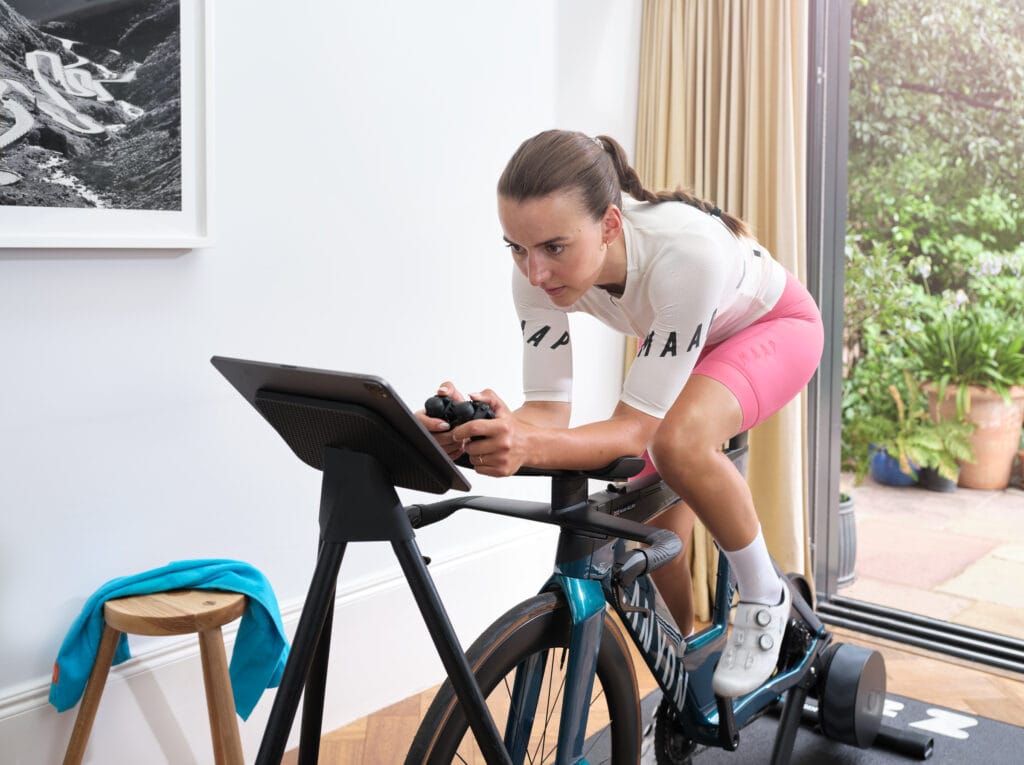
Immersive indoor cycling apps simulate riding and racing environments, creating high-visibility digital brand environments.
Brands typically appear through:
- virtual team kits and bikes
- branded races, leagues and challenges
- naming rights for digital events
Examples include Zwift, ROUVY, MyWhoosh and other virtual cycling platforms.
While platforms like Zwift and Rouvy focus strongly on in-game brand integrations, MyWhoosh is expanding its model through broadcast partnerships, gamified activations and deeper performance features, adding a media and infrastructure layer to the platform strategy.
Marketing logic
This cluster follows an experiential and event-based marketing logic. Visibility is intense but time-bound – comparable to classic event sponsorship translated into digital training environments.
These platforms are particularly suited for:
- campaign-driven activations
- product launches
- seasonal initiatives
- event-style brand storytelling


2. Cycling Training and Performance Software Platforms
Cycling training and performance software platforms include activity tracking apps, structured training tools, performance analytics systems and specialised optimisation software such as cycling weather modelling, bike fitting solutions and biometric monitoring tools. These platforms operate as daily-use performance infrastructure across amateur and professional cycling.
Brand activation typically includes:
- sponsored challenges
- recurring club formats
- long-term integrations linked to training activity
Prominent examples include Strava, TrainingPeaks and manufacturer-linked training ecosystems.
Beyond immersive environments, performance platforms such as TrainingPeaks are embedding themselves structurally into the professional team ecosystem, shifting digital sponsorship from visibility to long-term infrastructure partnerships. At the same time, developments such as Vekta’s WorldTour partnerships suggest that competition within the performance infrastructure layer is intensifying.
Marketing logic
This cluster follows a habitual and relationship-based marketing logic. Brand visibility emerges through repetition and participation rather than visual dominance.
For many athletes, these platforms function as training diaries and performance references. Brands therefore become part of the routine rather than a campaign message.
3. Smart Trainers, Cycling Computers and Wearables
Hardware such as smart trainers, wearables and cycling computers is not a media platform itself, but acts as a gateway into digital ecosystems.
Through data collection, device integration and software connectivity, hardware determines:
- which platforms athletes use
- how data flows between systems
- where digital visibility ultimately occurs
Examples include Wahoo and WHOOP, alongside broader device ecosystems.
Marketing logic
This cluster follows an ecosystem and infrastructure marketing logic. Sponsorship value lies not in direct visibility, but in controlling access, integration and compatibility.
4. AI Performance Tools and Data-Driven Cycling Technology
AI-driven tools and digital performance partners increasingly appear within professional cycling, particularly in training optimisation and performance analysis.
These partners are included only when they:
- directly enhance training or performance workflows
- are visible as sponsors or partners within those systems
Marketing logic
AI-related partnerships follow a capability and proof-based marketing logic. Visibility is created through demonstrated performance improvements rather than exposure.
AI in this context functions as an optimisation layer within existing platforms, not as a standalone sponsorship environment.
Digital Platform Marketing vs. Classic Sponsorship
| Aspect | Classic Sponsorship | Digital Platforms |
|---|---|---|
| Visibility | Passive | Functional |
| Frequency | Event-based | Daily or recurring |
| Brand role | Sender | Enabler |
| Measurement | Reach | Usage and integration |
| Core value | Awareness | Trust and adoption |
Cycling Performance Technology — Ongoing Sponsorship Observation
Cycling performance technology is not static. Partnerships involving indoor cycling apps, cycling training software, smart trainers and wearables evolve continuously throughout the season.
Lead Out tracks these developments on a monthly basis, analysing how performance technology brands activate within professional cycling and how digital training platforms expand their presence across WorldTour teams.
How This Page Is Used
This page serves as a navigation and reference hub for Cycling Performance Technology.
Individual deep dives, monthly platform updates and case studies are linked within the relevant clusters.
The structure remains stable while content and data are continuously updated as new platforms, partnerships and sponsorship models emerge.
For ongoing updates and recent platform movements, see our latest Performance Tech Recap.

Working in cycling sponsorship, marketing or media?
Get the pro cycling commercial recap.
Curated insights on sponsorship, marketing and commercial developments in professional cycling.
No noise. One recap. Every month. Unsubscribe anytime.