

Sponsorship Activation: More than just visibility
In professional cycling, sponsorship activation goes far beyond logo exposure or naming rights. It describes how brands use sponsorships to create real interaction — through usage, participation or functional involvement in the sport. The sections below outline the core principles and sponsorship activation examples from pro cycling.
Because products or services are used in or in the context of competition, sponsors take on operational roles, and brands often become part of the sporting action itself, pro cycling offers a particularly clear environment to understand what sponsorship activation actually means in practice.
Articles and insights such as this are collected and summarised in a monthly recap — subscribe here
What Is Sponsorship Activation?
Sponsorship activation refers to the actions that translate sponsorship rights into real interaction, usage or experience.
A sponsorship agreement provides access: visibility, naming rights or association with a team, event or athlete.
Activation determines whether these rights remain passive or are turned into something people can engage with. Activation can take many forms, but it always involves something happening beyond exposure alone.
In professional cycling, activation is often visible because sponsors are closely connected to performance, infrastructure or participation.
Sponsorship Rights vs. Sponsorship Activation
Title sponsorships and naming rights create automatic visibility, but they do not activate themselves. Activation requires deliberate action: enabling participation, fulfilling a function, proving a claim or encouraging behaviour. Without this step, even highly visible sponsorships may remain limited in impact.
Sponsorship rights
define where and how a brand may appear.
Sponsorship activation
defines how the brand becomes relevant.
How sponsorship activation shows up in pro cycling
Functional
Brands become operationally relevant to teams or events by providing necessary vehicles, equipment, and infrastructure.
Participatory
Sponsorships extend participation beyond spectatorship — inviting people to ride, track, or engage with the sport directly.
Purpose-Driven
A brand’s claim, values, or expertise is proven in the sport through performance and commitment, bypassing traditional messaging.
Sponsor activation platforms: from framework to software
Sponsorship activation in cycling is fragmented. Rights sit in contracts, activations happen across media and events, and learnings are rarely centralized.
This is why activation first needs a framework: a shared logic to define activation types, channels, ownership and evaluation criteria.
Once this framework exists, it naturally translates into software: sponsor activation platforms that document, structure and analyze activations across teams, events and media.
In other sports and adjacent industries, sponsorship and partnership teams increasingly rely on dedicated platforms to manage activation workflows, reporting and internal transparency.
Lead Out does not offer activation software. Instead, it observes, compares and analyzes how activation frameworks and tools are actually used in professional cycling.
Why Pro Cycling Is a Strong Reference for Sponsorship Activation
Professional cycling is a useful reference point for sponsorship activation because the relationship between brand and sport is unusually direct.
Products are used under competitive conditions, sponsors often provide essential infrastructure, and many activations extend beyond spectatorship into participation. As a result, activation in cycling is easier to observe, analyse and compare than in many other sports. Many activation strategies rely on technical and performance integration.
Effective sponsorship activation depends on how teams are structured commercially and which partners are integrated into their ecosystems.
These conditions vary significantly across teams, as illustrated by the current overview of the UCI WorldTour teams 2026, which highlights how sponsorship structures, naming setups and partner portfolios differ at the start of the new cycle.
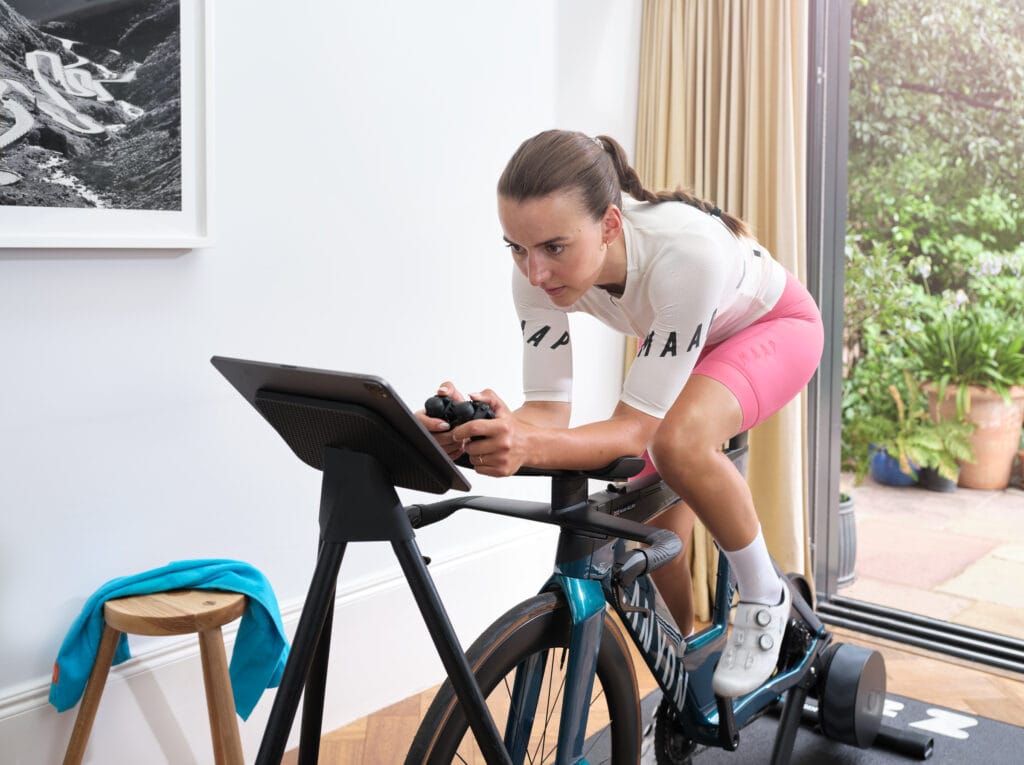
These dynamics are particularly visible in virtual cycling, where digital training platforms and performance tools create new forms of sponsorship activation that combine usage, participation and visibility.
Sponsorship Activation Examples in Pro Cycling
Lease a Bike: Turning Team Sponsorship into Everyday Cycling
The title sponsor of Team Visma | Lease a Bike, gaining visibility through athletes such as Jonas Vingegaard, Wout van Aert and Marianne Vos, while activating the partnership beyond racing through enablement.
During the “Fiets naar je Werk Dagen” (Bike to Work Days) campaign, the brand demonstrated how cycling works in everyday life: Team managers replaced their support vehicles with cargo bikes, thus positioning the professional team as a direct role model for daily commuting. The leasing model separately lowers practical barriers (cost, procurement).
The value of the sponsorship is generated here through behavioral change (people cycling) and direct usage—not just through pure visibility.
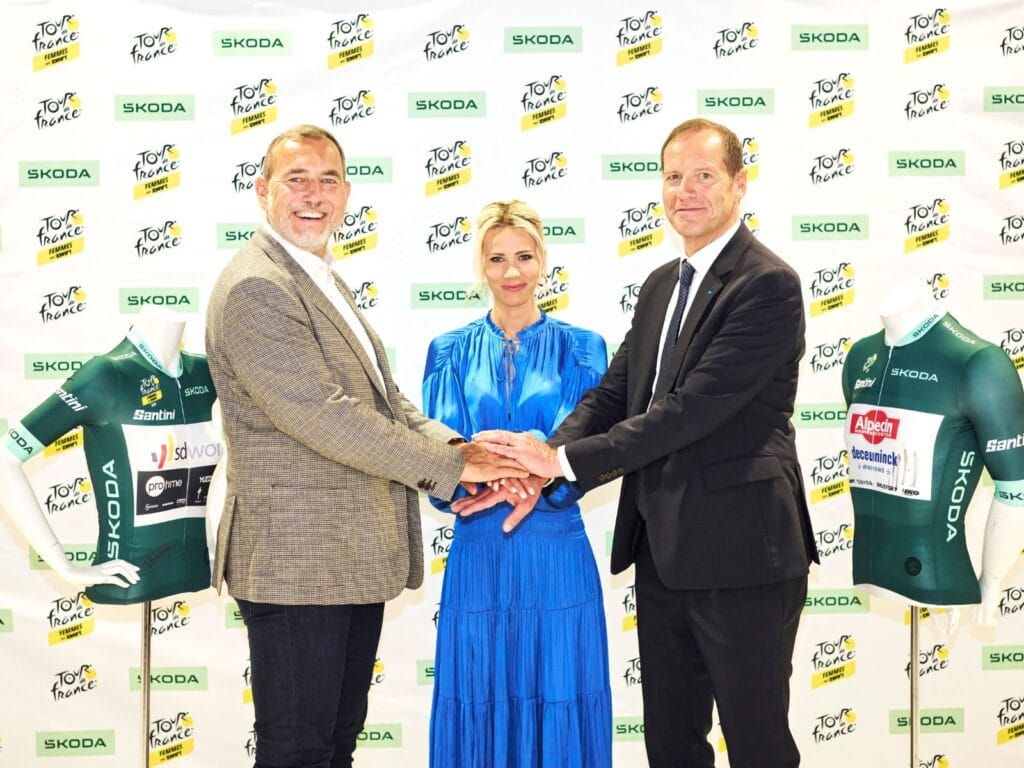
Škoda: Functional Sponsorship at the Tour de France and Beyond
Škoda is one of the most established sponsors in professional cycling and has been closely linked to the Tour de France for more than two decades and is a long-term partner of Amaury Sport Organisation (A.S.O.). In 2024, Škoda extended its agreement with A.S.O. until 2028, covering around 20 international cycling events, including the Tour de France, Tour de France Femmes avec Zwift, La Vuelta and several major classics.
Škoda’s sponsorship goes beyond visibility. As an official vehicle partner, the brand provides operational race and organisation vehicles, while its renewed agreement with A.S.O. highlights shared values around sustainability and electrification. In parallel, Škoda activates the partnership through activities like We Love Cycling, a content and community platform that translates professional cycling into everyday relevance.
Škoda’s connection to cycling is both historical and strategic. Founded as a bicycle manufacturer in 1895, the brand uses cycling sponsorship to underline its roots while positioning itself around modern mobility, sustainability and daily use. Combined with functional roles and long-term content activation, this makes cycling a continuous activation platform rather than a short-term branding exercise.
Tour de France Femmes avec Zwift: When a Platform Becomes Part of the Event
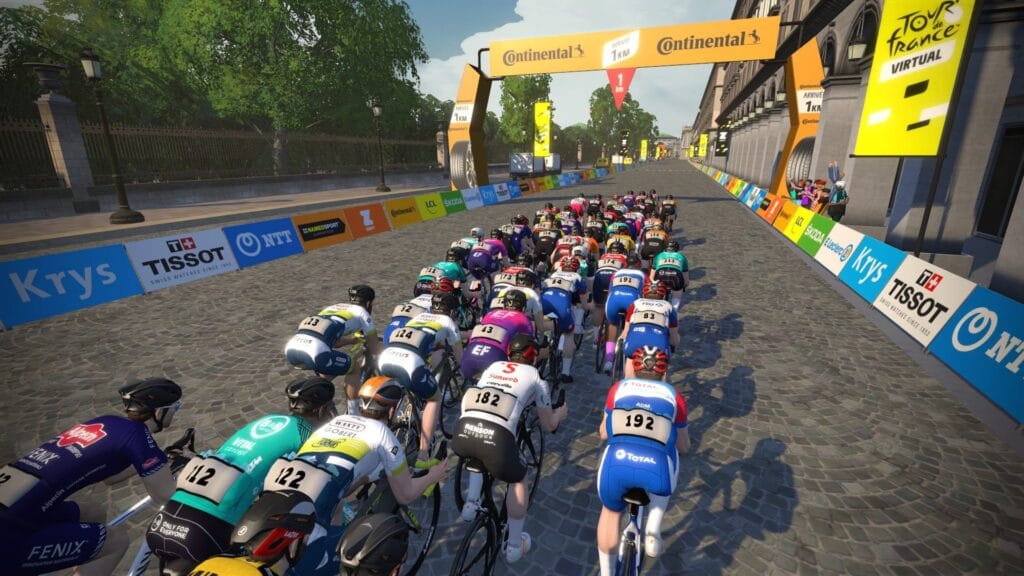
The Tour de France Femmes avec Zwift was initiated through a collaboration between Zwift and A.S.O. to elevate women’s cycling globally. The partnership started with the Virtual Tour de France during the pandemic, featuring equal fields for men and women, which successfully set the stage for the landmark launch of the physical race. Due to its continued success, Zwift renewed the partnership in Autumn 2025 until 2029, reaffirming its commitment to women’s cycling.
Zwift’s role extends beyond mere sponsorship. Through initiatives like “Watch the Femmes,” the platform connects the race to its global digital training community, transforming broadcast coverage into continuous active participation. The platform encourages action—watching, engaging, and riding—directly linking professional racing with personal involvement.
Zwift’s integral role in the event signifies an absolute commitment to women’s cycling. The platform is thus not just a sponsor, but a major driver of the current positive development in professional women’s cycling.
Team Novo Nordisk: Partnership as Proof, Not Promotion
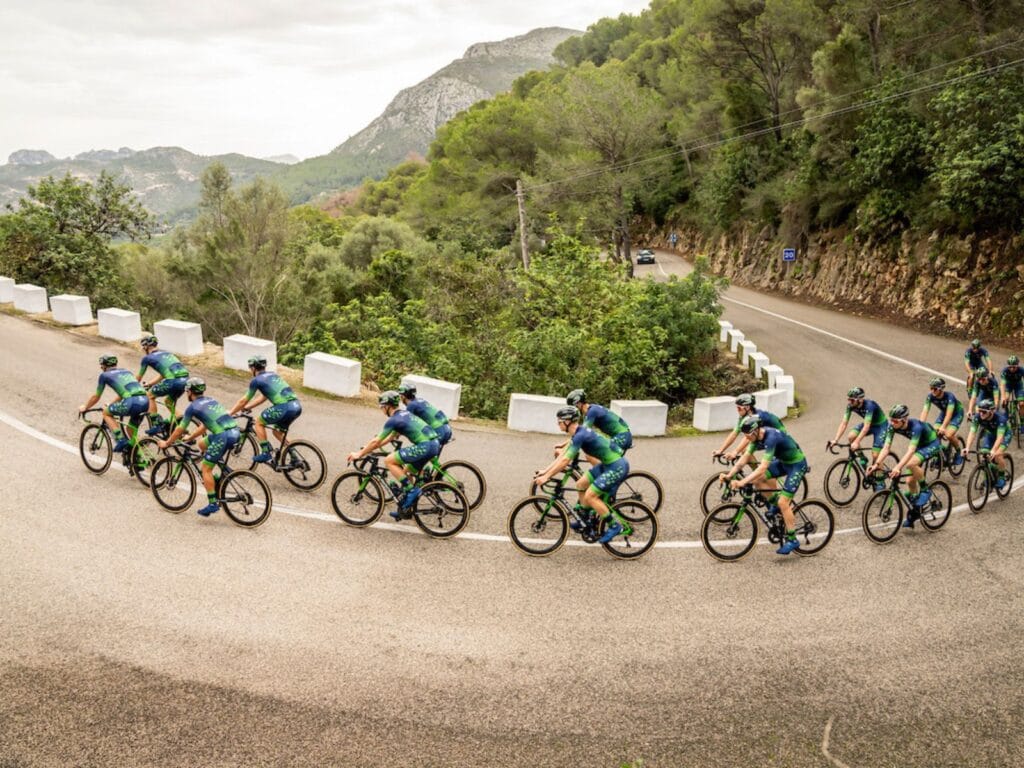
Team Novo Nordisk, sponsored by Novo Nordisk, is composed entirely of athletes living with type 1 diabetes. The team functions as a continuous communication platform in which the athletes act as credible ambassadors for the sponsor’s core message: “People with diabetes can accomplish anything.”
This makes the sporting project inseparable from Novo Nordisk’s brand positioning and purpose. The long-term partnership, in place since 2012 and extended on World Diabetes Day in Autumn 2025 until 2031, represents a form of activation that goes far beyond traditional logo placement.
Activation focuses strongly on education and community engagement beyond racing. By linking webshop revenue to social initiatives such as the World Diabetes Foundation, the sponsorship directly connects elite sport with Novo Nordisk’s broader social and health mission.
Red Bull Bora Hansgrohe: Making Brand Attitude Physical
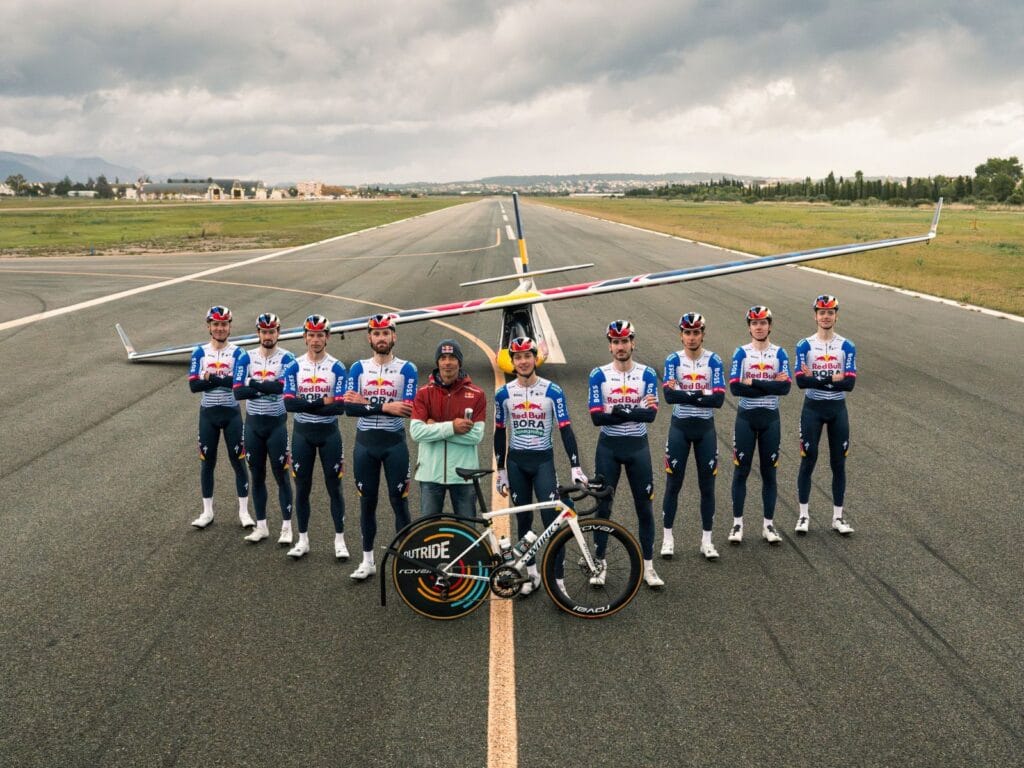
In December 2025, nine riders from Red Bull-Bora-Hansgrohe executed a highly visible activation event called Peloton Takeoff: the squad used pure pedal power to accelerate a piloted glider to take-off speed on a runway in Mallorca.
This fits squarely into Red Bull’s long-established brand DNA of staging spectacular, performance-driven stunts. Red Bull has long used extreme actions and record-style moments as a way to activate sponsorships beyond competition, and the cycling team provided a credible sporting platform for this approach.
The team itself is far from marginal. With Florian Lipowitz finishing third at the 2025 Tour de France and Remco Evenepoel joining as an Olympic champion and Grand Tour podium rider, Red Bull-Bora-Hansgrohe combines elite sporting relevance with high media visibility. This makes the activation more than a standalone stunt: it builds on a team that already carries competitive and narrative weight within the WorldTour.
In this context, the activation translates Red Bull’s broader brand logic — pushing physical limits and creating memorable moments — into professional cycling, using real athletes rather than symbolic marketing constructs.
What These Examples Show
Across all examples, sponsorship activation translates presence into something tangible: action, usage, participation or proof.
Activation does not depend on scale or complexity. It depends on whether a sponsorship is deliberately turned into something people can experience.
Sponsorship Activation Is Not Automatic
Title sponsorships and naming rights increase visibility, but they do not activate themselves. Activation begins when brands decide how their sponsorship should work, not just how it should appear.
Professional cycling offers clear, observable examples of this distinction, making it a valuable reference point for understanding sponsorship activation across sport and marketing.
More stories



Get the Pro Cycling Commercial Recap. Monthly.
Curated insights on sponsorship, marketing and commercial developments in professional cycling.
No noise. One recap. Every month. Unsubscribe anytime.