January 2026: The Start of the New Cycle
January 2026 set the tone for the new season in professional cycling, with commercial developments emerging less through headline-making deals and more through structural signals and continuity. As teams, events and partners moved from planning into execution mode, the focus shifted to how established models perform under current economic conditions.
This January recap highlights key sponsorship extensions, early-season event dynamics and renewed discussions around revenue models, offering a first snapshot of how professional cycling’s commercial landscape is shaping up at the beginning of the year.
Get the Monthly Recap
One recap. Every month. No noise. Unsubscribe anytime.
View all monthly pro cycling commercial recaps
UCI WorldTour 2026: Licence Cycle Sparks Sponsorship and Structural Shifts

The start of the 2026–2028 UCI WorldTour licence cycle marks a period of visible change in team naming, sponsorship, and ownership structures.
Key developments include new co-title sponsors (such as Premier Tech and CMA CGM), mergers (Lotto Intermarché), and expanded ownership stakes (Lidl–Trek), reflecting a broader commercial reset. The evolving partner portfolios highlight a shift toward deeper integration of technology, mobility, and service brands, signalling a more diversified and strategically aligned sponsorship landscape across the peloton. The broader context of these developments is explored in our detailed analysis of the UCI WorldTour 2026 licence cycle and its impact on team structures and sponsorship.
Santos Tour Down Under: Regional Sponsorship Patterns and Title Partner Scrutiny
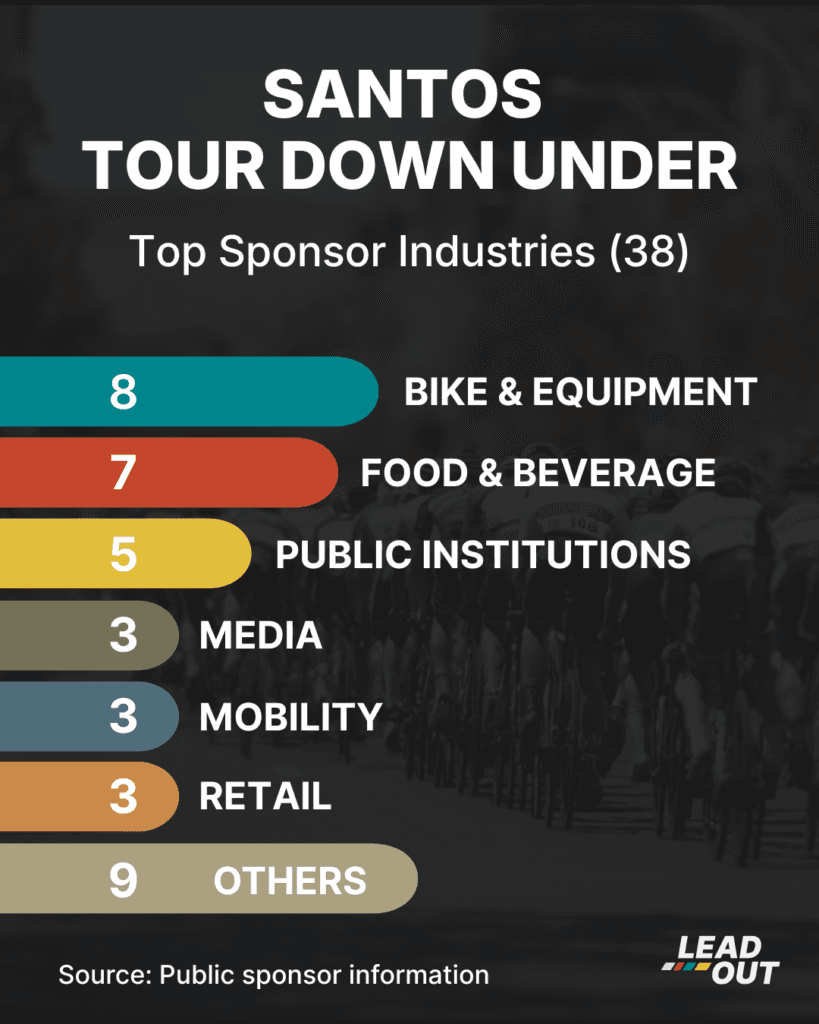
As the season-opening WorldTour event and the largest cycling race in the Southern Hemisphere, the Santos Tour Down Under is notable for its sponsorship structure, which is dominated by Australian companies and public institutions, reflecting a strong regional market focus.
Lead Out has examined this structure in depth in its analysis of the Santos Tour Down Under’s regional sponsorship model and title partner dynamics.
ASSOS Replaces Rapha as EF Pro Cycling Kit Partner
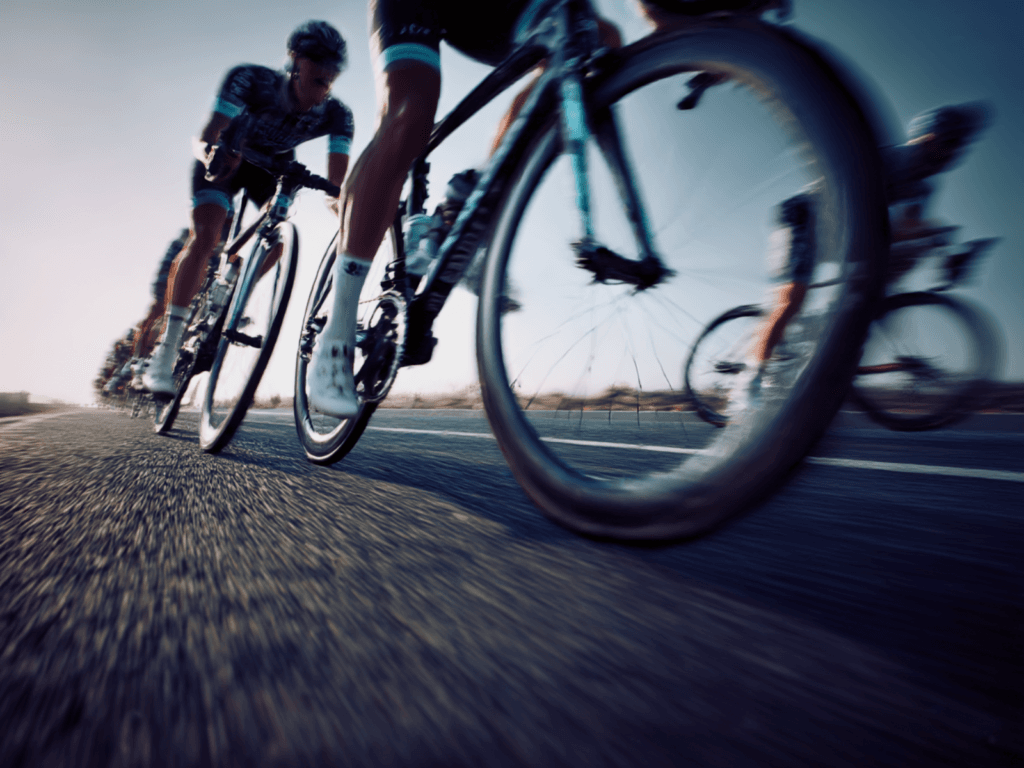
EF Pro Cycling’s new multi-year partnership with ASSOS, beginning in 2026, marks a strategic shift from Rapha’s narrative-driven branding to a focus on technical performance and system integration.
This transition underscores the evolving role of apparel sponsors in professional cycling, where kit partnerships increasingly signal team ambitions and serve as platforms for both technological development and brand identity. The move is examined in more detail in our article on ASSOS replacing Rapha as EF Pro Cycling’s kit partner from 2026.
Team Picnic PostNL Announces Raisin and Michelin Partnerships
Team Picnic PostNL has secured two significant partnerships: Raisin joins as an official partner supporting all team programs, aligning its pan-European financial platform with the team’s cross-border structure and focus on incremental improvement, while Michelin returns to top-level road cycling as Official Technical Partner. The Michelin partnership extends beyond tyre supply to deep technical collaboration, leveraging rider feedback from all team divisions to drive product innovation and performance gains, underscoring a broader trend of sponsors seeking integrated, data-driven relationships in professional cycling.
Visma Lease a Bike: Sponsor Portfolio Expansion and Role Clarity
Visma Lease a Bike has announced several new and expanded partnerships—including Bikeroom, Camelbak, Catawiki, Nike, BroadbandEU, Garmin, and Multiprotexion. Rather than replacing core suppliers or altering the sporting setup, these updates add targeted capabilities: Bikeroom and Catawiki extend the team’s presence into premium marketplaces and collector platforms, Camelbak and Garmin reinforce performance infrastructure, while BroadbandEU and Multiprotexion address operational needs in connectivity and security.
It is worth noting taht these partnerships apply across both the men’s and women’s programmes, reflecting a unified sponsor logic that avoids functional overlap and supports the organisation as a whole. The approach contrasts with more fragmented or event-driven models elsewhere in the peloton, signalling a shift toward sponsorship as system support—encompassing platforms, performance, and operations—rather than short-term exposure or visibility.
A full overview of these updates is available in our analysis of Visma Lease a Bike’s sponsor portfolio expansion and system-based partnerships.
XDS Astana 2026 Equipment Partnerships: Magene, EKOÏ, TRiPEAK
XDS Astana has announced new 2026 equipment partnerships with Magene (China, cycling technology), EKOÏ (France, apparel and eyewear), and TRiPEAK (Taiwan, performance components), reflecting a deliberate strategy to diversify its sponsorship portfolio across technology, apparel, and component segments; this approach not only brings WorldTour-level validation to emerging brands from different markets but also signals the team’s focus on long-term, detail-oriented collaborations that align with broader trends in professional cycling sponsorship and team development. he strategic rationale behind these deals is discussed in our overview of XDS Astana’s 2026 equipment partnerships.
Bahrain Victorious–ELILEE Multi-Year Equipment Partnership
Bahrain Victorious has signed a multi-year partnership with ELILEE, a rapidly growing Chinese manufacturer of cranksets and power meters, following a comprehensive component review prompted by the team’s switch to Bianchi bikes; this deal is significant as it not only reflects the increasing influence of Asian brands in the WorldTour equipment market but also underscores the strategic importance of technical partnerships for performance optimisation and product development, with both parties committing to ongoing innovation and feedback-driven improvements at the highest level of professional cycling. The implications of this deal are explored further in our article on the Bahrain Victorious–ELILEE multi-year equipment partnership.
Van Rysel Tour de France Activation: House of Cycling Dreams in Lille
VAN RYSEL opted for a non-traditional Tour de France activation during the Grand Départ in Lille by establishing the House of Cycling Dreams – a brand-led, open-access space away from the race route that prioritised community interaction, service, and cultural relevance over broadcast visibility or direct sales, resulting in significant earned media value, high engagement rates, and recognition as a shortlisted entry at the 2026 ESA Awards for Best Use of PR. This approach highlights a shift in cycling sponsorship strategy, leveraging city-level cultural engagement and physical presence rather than classic race-side or team sponsorship models.
This activation is analysed in detail in our case study on Van Rysel’s Tour de France activation in Lille.
Six Days and the economics of ticketed cycling
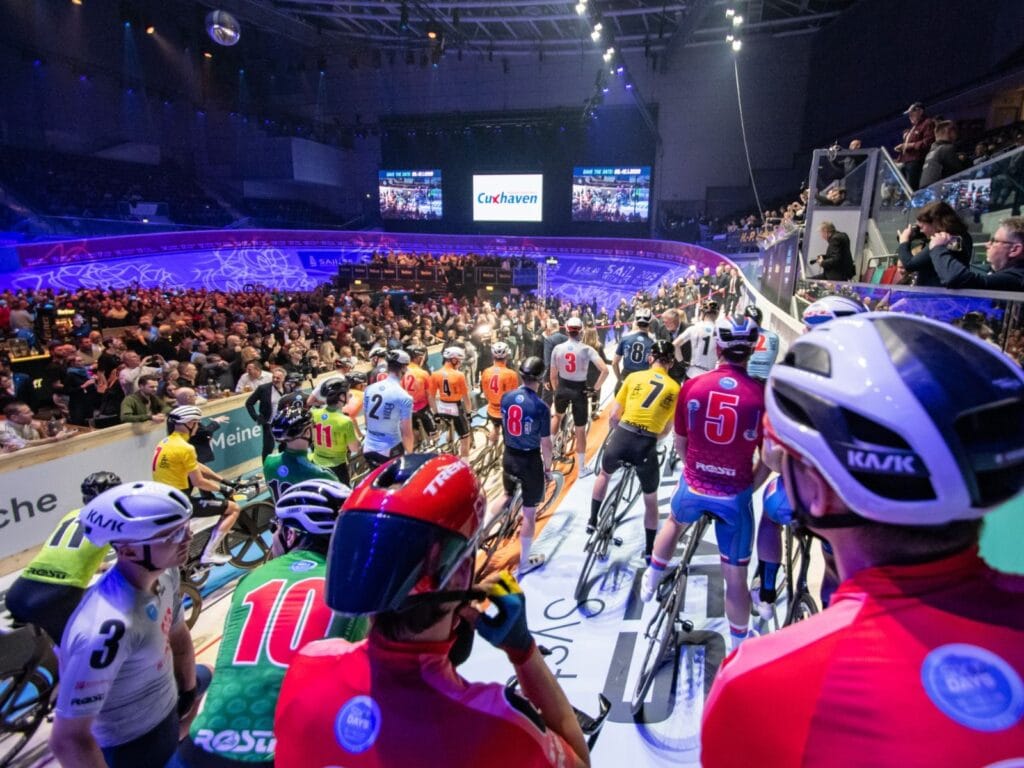
Six Days events have traditionally relied on ticketing as a central revenue pillar, built around enclosed venues and a deliberately staged live experience.
While road cycling briefly revisited the idea of charging admission for iconic Tour de France mountain stages in late 2025 — only to abandon it once again – track cycling continues to demonstrate a more pragmatic model. Events such as Sixdays Bremen show that, where access is controlled and added value is clear, ticket sales remain both accepted and economically viable. This contrast is illustrated by our analysis of Six Days events and the economics of ticketed cycling, with Sixdays Bremen as a central example.
Previous recap: Cycling Sponsorship December 2025

Get the Pro Cycling Commercial Recap. Monthly.
Curated insights on sponsorship, marketing and commercial developments in professional cycling.
No noise. One recap. Every month. Unsubscribe anytime.